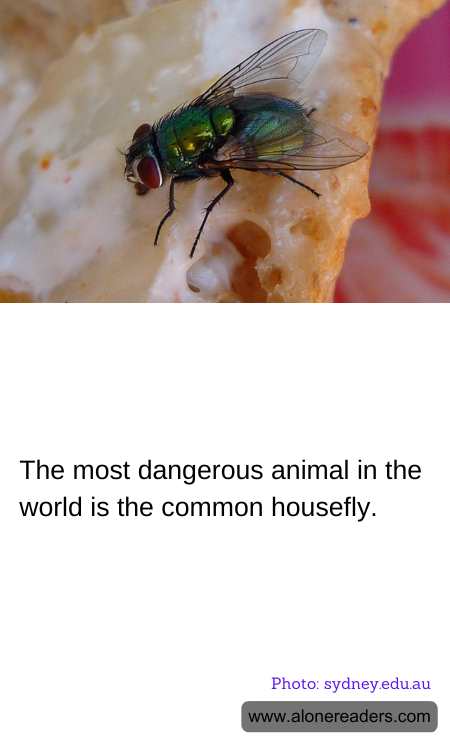
When we think of dangerous animals, images of sharks, lions, or venomous snakes might come to mind. However, one of the most perilous creatures on the planet is not a fearsome predator but rather the unassuming common housefly. Despite its small size and seemingly innocuous presence, the housefly is responsible for spreading a multitude of diseases that pose significant threats to human health.
Houseflies, scientifically known as Musca domestica, are ubiquitous insects found in nearly every corner of the globe. Their adaptability and rapid breeding cycles make them one of the most common pests in human environments. What makes them particularly dangerous is their ability to carry and transmit pathogens. Houseflies are known to spread over 100 different pathogens, including bacteria, viruses, and parasites. These pathogens can cause diseases such as cholera, typhoid fever, dysentery, and even more severe illnesses like tuberculosis.
The housefly's role as a disease vector is primarily due to its feeding and breeding habits. Flies are attracted to decaying organic matter, garbage, and feces, where they lay their eggs and feed. As they move from these unsanitary environments to human food and living spaces, they carry pathogens on their bodies and in their digestive systems. When a fly lands on food or surfaces, it can transfer these pathogens, leading to contamination and potential outbreaks of disease.
Moreover, houseflies have a unique feeding mechanism that exacerbates their role in disease transmission. They cannot ingest solid food, so they regurgitate digestive enzymes onto their food to liquefy it before consumption. This process not only contaminates the food but also facilitates the spread of any pathogens they carry. Additionally, their constant grooming behavior ensures that pathogens are spread across their entire body, increasing the likelihood of contamination.
Despite their danger, houseflies are often overlooked in discussions about public health threats. This oversight can lead to inadequate measures to control their populations and prevent disease transmission. Effective fly control requires a combination of sanitation, waste management, and the use of insecticides when necessary. Keeping living areas clean, covering food, and properly disposing of waste can significantly reduce the risk of fly-borne diseases.
In conclusion, while the common housefly may not inspire the same fear as larger or more visibly dangerous animals, its impact on human health is profound. By understanding the risks associated with houseflies and taking proactive measures to control their populations, we can mitigate their role as vectors of disease and protect public health. The next time you see a housefly buzzing around, remember that this tiny insect is one of the most dangerous animals in the world, not because of its bite or sting, but because of its ability to spread disease.
