More About This Card
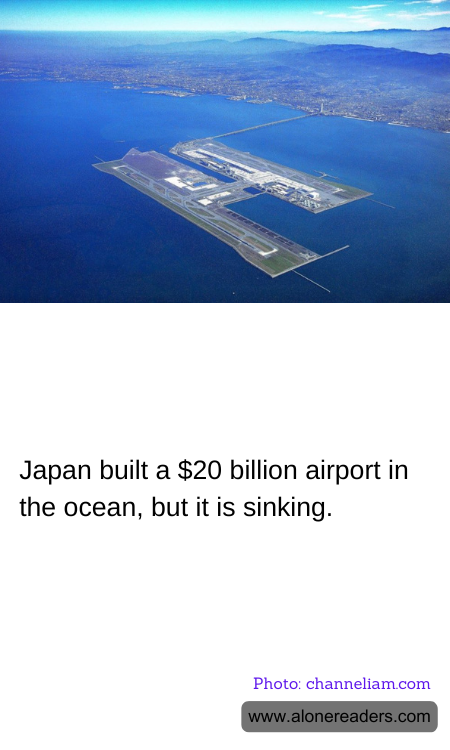
In the realm of engineering marvels, Japan's Kansai International Airport stands out as a testament to human ingenuity and ambition. Constructed on an artificial island in Osaka Bay, this $20 billion project was designed to alleviate congestion at Osaka's existing airports and to serve as a gateway to the Kansai region. However, despite its impressive design and strategic importance, the airport faces a significant challenge: it is sinking.
The idea of building an airport in the ocean was born out of necessity. Japan's mountainous terrain and densely populated cities left little room for expansion on land. The solution was to create a man-made island, a feat that required extensive planning and cutting-edge technology. Construction began in 1987, and after six years of relentless effort, Kansai International Airport opened its doors in 1994. The island, measuring 4 kilometers long and 2.5 kilometers wide, was a marvel of modern engineering, designed to withstand earthquakes and typhoons.
However, the airport's location on reclaimed land has led to an ongoing battle with subsidence. The island was built on a layer of soft clay, which has been compacting under the weight of the airport's infrastructure. This natural process, known as settlement, was anticipated by engineers, who incorporated adjustable columns and other features to accommodate gradual sinking. Despite these precautions, the rate of subsidence has been faster than expected, with parts of the airport sinking by several meters since its opening.
Efforts to mitigate the sinking have been ongoing. Engineers have employed various techniques to slow the rate of subsidence, including injecting cement into the ground and reinforcing the island's perimeter with steel walls. These measures have helped stabilize the airport, but the challenge remains. The airport's sinking has also been exacerbated by rising sea levels, a consequence of climate change that poses a long-term threat to coastal infrastructure worldwide.
Despite these challenges, Kansai International Airport continues to operate successfully, serving millions of passengers each year. It remains a vital hub for international travel and a symbol of Japan's technological prowess. The airport's management is committed to ensuring its longevity, investing in continuous monitoring and maintenance to address the subsidence issue.
The story of Kansai International Airport is a reminder of the complexities involved in large-scale engineering projects, particularly those that push the boundaries of what is possible. It highlights the need for ongoing innovation and adaptation in the face of environmental challenges. As Japan continues to navigate these issues, Kansai International Airport stands as both a cautionary tale and an enduring symbol of human achievement.