More About This Card
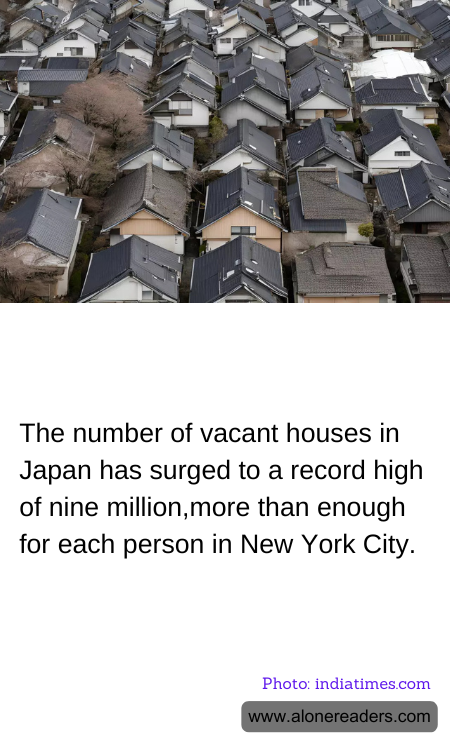
Japan is currently facing a unique and pressing issue: a record high of nine million vacant houses. This staggering number is more than enough to provide a home for every resident of New York City, highlighting the scale of the problem. The phenomenon, known as "akiya," is a growing concern for the Japanese government and society, reflecting broader demographic and economic challenges.
The surge in vacant homes is largely attributed to Japan's declining population and urban migration trends. As the birth rate continues to fall and the population ages, rural areas are experiencing a significant decrease in residents. Young people are flocking to urban centers in search of better job opportunities, leaving behind a trail of empty homes in the countryside. This migration pattern has resulted in entire villages becoming ghost towns, with properties left to deteriorate.
The economic implications of this trend are profound. Vacant homes can lead to a decrease in property values, affecting the wealth of homeowners and the financial stability of local governments reliant on property taxes. Moreover, abandoned houses can become safety hazards, attracting vandalism and posing fire risks. The maintenance and demolition of these properties also place a financial burden on municipalities already struggling with limited resources.
Efforts to address the issue have been varied. Some local governments are offering incentives to encourage people to move into these vacant homes, such as subsidies for renovations or even giving away properties for free. Additionally, there are initiatives to repurpose these homes for community use, such as transforming them into cultural centers or guesthouses to boost local tourism. However, these measures have had limited success in reversing the trend.
The cultural aspect of homeownership in Japan also plays a role in the persistence of vacant houses. Many Japanese people have a strong attachment to their ancestral homes, making it difficult to sell or demolish them, even when they are no longer in use. This cultural sentiment, combined with complex inheritance laws, often results in properties being left unoccupied for extended periods.
Addressing the issue of vacant houses in Japan requires a multifaceted approach that considers economic, social, and cultural factors. It involves not only finding ways to repopulate rural areas but also rethinking urban planning and housing policies to accommodate the changing demographics. As Japan grapples with this challenge, it serves as a cautionary tale for other countries facing similar demographic shifts, emphasizing the need for proactive and innovative solutions to manage housing and population dynamics effectively.