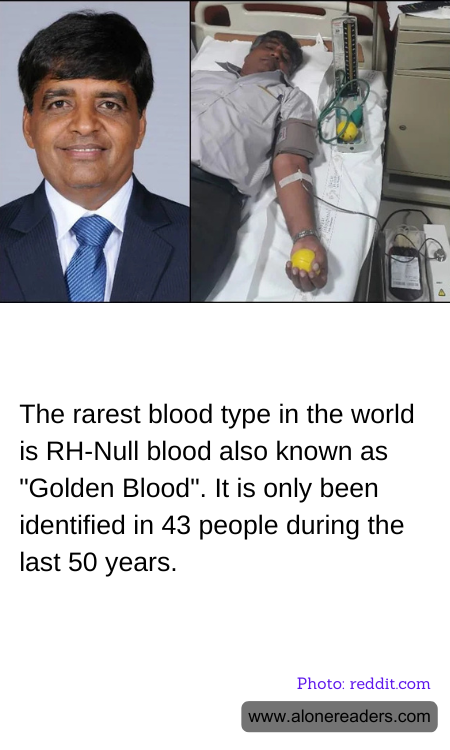
In the vast and intricate world of human biology, blood types play a crucial role in medical science, particularly in transfusions and organ transplants. Among the various blood types, one stands out not only for its rarity but also for its unique characteristics. Known as RH-Null blood, or more colloquially as "Golden Blood," this blood type is so rare that it has been identified in only 43 individuals over the past 50 years.
The rarity of RH-Null blood lies in its lack of Rh antigens. Most people are familiar with the common blood types: A, B, AB, and O, each of which can be Rh-positive or Rh-negative. The Rh factor, named after the Rhesus monkey in which it was first discovered, is a protein found on the surface of red blood cells. While Rh-negative blood types are relatively rare, RH-Null is even more extraordinary because it completely lacks all 61 antigens in the Rh system. This absence makes it a universal donor for anyone with rare blood types within the Rh system, but it also poses significant challenges for those who possess it.
The discovery of RH-Null blood dates back to 1961 when it was first identified in an Aboriginal Australian woman. Since then, only a handful of cases have been documented worldwide. The scarcity of this blood type means that individuals with RH-Null blood face unique challenges. In the event of a medical emergency requiring a blood transfusion, finding a compatible donor is incredibly difficult. This has led to the establishment of a global network of RH-Null donors who are willing to travel across borders to donate their blood when needed.
Despite its challenges, RH-Null blood is a subject of fascination and importance in medical research. Scientists study it to better understand the Rh system and its implications for blood transfusions and immune responses. The unique properties of RH-Null blood also make it invaluable in developing treatments for various blood disorders and in the study of genetic mutations.
For those who possess this rare blood type, life can be a delicate balance of caution and contribution. They are often encouraged to donate blood regularly to ensure a supply is available for themselves and others in need. Their willingness to participate in this global network of donors highlights the spirit of cooperation and altruism that transcends borders and cultures.
In conclusion, RH-Null blood, or "Golden Blood," is a remarkable example of the diversity and complexity of human biology. Its rarity and unique properties make it a subject of intrigue and importance in the medical community. As science continues to advance, the study of RH-Null blood may unlock new insights into the Rh system and lead to breakthroughs in medical treatments, offering hope to those with rare blood types and contributing to the broader understanding of human health.
