More About This Card
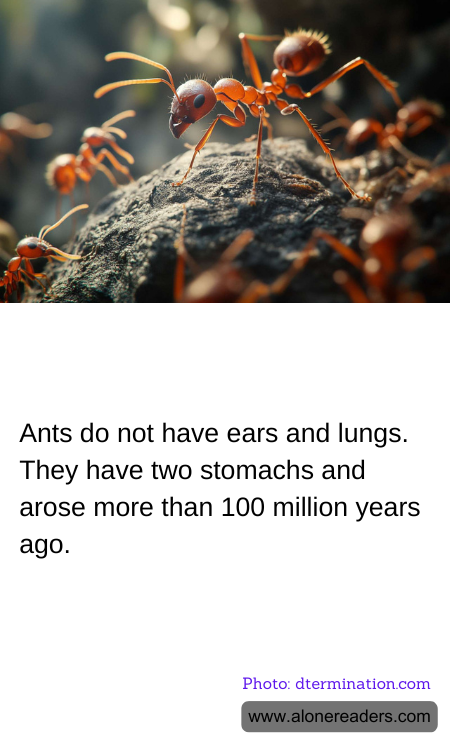
Ants are fascinating creatures that have intrigued scientists and nature enthusiasts alike for centuries. Despite their small size, ants exhibit complex behaviors and possess unique physiological traits that set them apart from many other insects. One of the most intriguing aspects of ants is their anatomy, which lacks certain features commonly found in other animals, such as ears and lungs. Instead, ants have evolved a set of adaptations that allow them to thrive in diverse environments across the globe.
Unlike humans and many other animals, ants do not have ears. Instead, they rely on their ability to sense vibrations through their legs. This adaptation allows them to detect movements and communicate with other ants in their colony. By picking up on these subtle vibrations, ants can effectively coordinate their activities, whether it's foraging for food, defending their nest, or caring for their young. This unique form of communication is a testament to the ants' evolutionary success and their ability to adapt to their surroundings.
In addition to lacking ears, ants also do not have lungs. Instead of breathing through a centralized respiratory system, ants utilize a network of tiny tubes called tracheae. These tubes allow oxygen to diffuse directly into their bodies and carbon dioxide to be expelled. This efficient system enables ants to survive in a variety of environments, from humid rainforests to arid deserts. The absence of lungs is a remarkable adaptation that has allowed ants to become one of the most widespread and successful groups of insects on the planet.
Another fascinating aspect of ant physiology is their possession of two stomachs. One stomach is used for digesting food for their own nourishment, while the other, known as the "social stomach," is used to store food that can be shared with other members of the colony. This ability to share food is crucial for the survival of the colony, as it ensures that all members, including the queen, larvae, and workers, receive the necessary nutrients to thrive. This communal approach to feeding is a key factor in the ants' ability to maintain large, complex societies.
Ants have been around for more than 100 million years, with fossil evidence suggesting that they first appeared during the Cretaceous period. Over this vast expanse of time, ants have diversified into thousands of species, each adapted to their specific ecological niche. Their long evolutionary history has equipped them with a range of survival strategies, from forming symbiotic relationships with plants and other insects to developing sophisticated defense mechanisms against predators.
In conclusion, ants are remarkable creatures that continue to captivate our imagination with their unique adaptations and complex social structures. Their lack of ears and lungs, coupled with their dual stomachs and ancient lineage, highlight the incredible diversity and resilience of life on Earth. As we continue to study these tiny yet mighty insects, we gain valuable insights into the intricate web of life that sustains our planet.