More About This Card
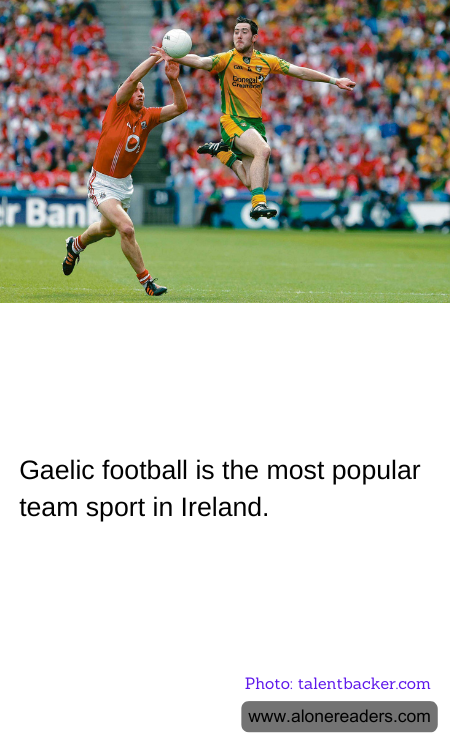
Gaelic football, a unique and exhilarating sport, holds a special place in the hearts of the Irish people. As the most popular team sport in Ireland, it is not just a game but a vibrant part of the country's cultural fabric. Combining elements of soccer, rugby, and basketball, Gaelic football is played with a round ball that can be carried, kicked, and hand-passed, making it a dynamic and fast-paced spectacle that captivates audiences of all ages.
The sport's popularity is deeply rooted in its history and tradition. Gaelic football is governed by the Gaelic Athletic Association (GAA), which was founded in 1884 to promote traditional Irish sports and culture. The GAA has played a crucial role in fostering a sense of community and national pride, with Gaelic football at the forefront of its efforts. The sport is played at both amateur and professional levels, with clubs in every county of Ireland and a strong presence in Irish communities abroad.
One of the key reasons for Gaelic football's widespread appeal is its accessibility. Unlike many other sports, Gaelic football is played by people of all ages and skill levels, from young children learning the basics to seasoned athletes competing in the All-Ireland Senior Football Championship, the pinnacle of the sport. This inclusivity has helped to cultivate a passionate fan base that spans generations, with families often attending matches together and supporting their local clubs with unwavering loyalty.
The All-Ireland Senior Football Championship, held annually, is the highlight of the Gaelic football calendar. The competition sees county teams from across Ireland compete for the coveted Sam Maguire Cup, drawing massive crowds and generating intense excitement nationwide. The final, held at Croke Park in Dublin, is a major event, attracting tens of thousands of spectators and millions of television viewers. The atmosphere is electric, with fans donning their county colors and cheering passionately for their teams.
Gaelic football's influence extends beyond the pitch, contributing significantly to the social and cultural life of Ireland. The sport fosters a strong sense of community, with local clubs serving as hubs for social interaction and community engagement. These clubs often organize events, fundraisers, and social gatherings, strengthening bonds among members and promoting a sense of belonging.
In recent years, Gaelic football has also gained international recognition, with expatriate communities in countries like the United States, Australia, and the United Kingdom forming their own clubs and leagues. This global expansion has introduced the sport to new audiences, further cementing its status as a beloved and enduring symbol of Irish culture.
In conclusion, Gaelic football's popularity in Ireland is a testament to its rich history, cultural significance, and community spirit. As a sport that unites people of all ages and backgrounds, it continues to thrive as a cherished national pastime, embodying the passion and pride of the Irish people. Whether played on the local pitch or watched on the grand stage of Croke Park, Gaelic football remains an integral part of Ireland's identity, celebrated and enjoyed by millions.