More About This Card
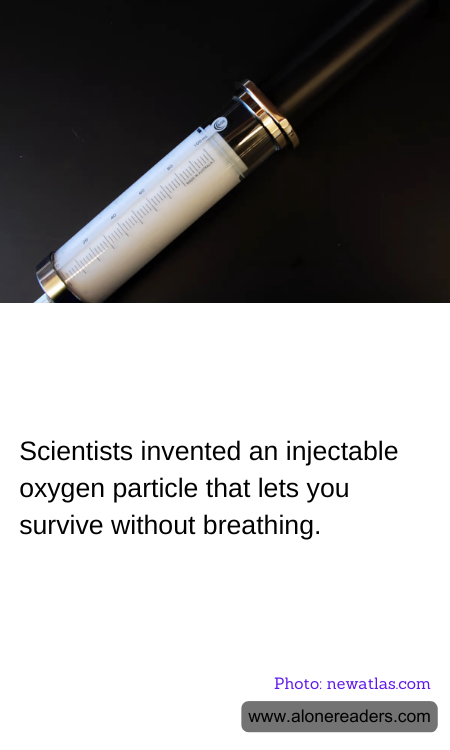
In a groundbreaking development that could revolutionize emergency medicine and critical care, scientists have invented an injectable oxygen particle that allows individuals to survive without breathing for a limited time. This innovative technology, which has been in development for several years, promises to provide a life-saving solution in situations where breathing is compromised, such as during severe respiratory failure, drowning incidents, or traumatic injuries.
The injectable oxygen particles are composed of tiny, lipid-based microparticles filled with concentrated oxygen gas. When injected into the bloodstream, these particles release oxygen directly into the circulatory system, bypassing the lungs entirely. This process can maintain oxygenation of vital organs for up to 30 minutes, buying crucial time for medical intervention and potentially saving countless lives.
The development of these oxygen particles was driven by the need to address critical situations where traditional methods of oxygen delivery, such as ventilators or oxygen masks, are not feasible or effective. For instance, in cases of acute lung failure or during complex surgical procedures, the ability to maintain oxygen levels without relying on lung function could significantly improve patient outcomes.
The technology behind these injectable particles is both complex and fascinating. The particles are engineered to be small enough to travel through the bloodstream without causing blockages, yet robust enough to carry and release a significant amount of oxygen. The lipid shell of the particles is designed to be biocompatible, ensuring that they can be safely metabolized by the body after their oxygen payload has been delivered.
While the potential applications of this technology are vast, it is important to note that it is still in the experimental stage. Clinical trials are ongoing to ensure the safety and efficacy of the particles in humans. Researchers are optimistic, however, that with further development, this technology could be integrated into emergency medical protocols and become a standard tool in hospitals and ambulances worldwide.
The implications of this invention extend beyond emergency medicine. In the future, it could be used to support astronauts in space missions, enhance the safety of deep-sea divers, or even assist in high-altitude expeditions where oxygen levels are low. The ability to provide oxygen without relying on the respiratory system opens up new possibilities for human exploration and survival in extreme environments.
As scientists continue to refine and test this technology, the hope is that it will soon become a viable option for saving lives in critical situations. The invention of injectable oxygen particles represents a remarkable leap forward in medical science, offering a glimpse into a future where the limitations of human physiology can be overcome with innovative solutions.