More About This Card
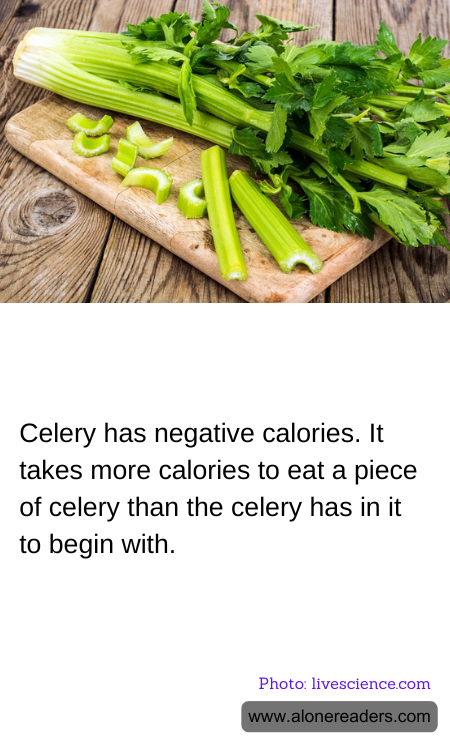
Celery has long been touted as a dieter's dream, often celebrated for its low-calorie content and high water composition. A popular claim surrounding this crunchy vegetable is that it possesses "negative calories," suggesting that the body expends more energy digesting celery than the calories it provides. This intriguing notion has captured the imagination of many, but how much truth does it hold?
Celery is indeed a low-calorie food, with a single stalk containing about six calories. It is composed of approximately 95% water, with the remainder being dietary fiber and a small amount of vitamins and minerals. The idea of negative calories stems from the concept of the thermic effect of food (TEF), which is the energy required to digest, absorb, and metabolize nutrients. Foods with high fiber content, like celery, do require more energy to process, but the actual caloric expenditure is relatively modest.
The thermic effect of food generally accounts for about 5-10% of the total energy expenditure. For celery, this means that while the body does burn some calories during digestion, it is unlikely to exceed the calories contained in the celery itself. For instance, if you consume a stalk of celery with six calories, the energy used to digest it might be around half a calorie. Therefore, the net caloric impact is still positive, albeit minimal.
Despite the myth of negative calories being debunked, celery remains a valuable addition to a healthy diet. Its high water content makes it an excellent choice for hydration, and its fiber aids in digestion and promotes a feeling of fullness, which can help with weight management. Additionally, celery is a source of essential nutrients such as vitamin K, vitamin C, potassium, and folate, contributing to overall health and well-being.
For those looking to maintain or lose weight, incorporating celery into meals and snacks can be beneficial. It can be enjoyed raw, paired with healthy dips like hummus, or added to salads and soups for extra crunch and flavor. However, it is important to remember that no single food, including celery, should be relied upon exclusively for weight loss. A balanced diet rich in a variety of fruits, vegetables, lean proteins, and whole grains is key to achieving and maintaining a healthy weight.
In conclusion, while celery may not possess the magical negative calorie effect often claimed, it remains a nutritious, low-calorie food that can support a healthy lifestyle. By understanding the role of celery and other similar foods in our diet, we can make informed choices that contribute to our overall health and wellness.