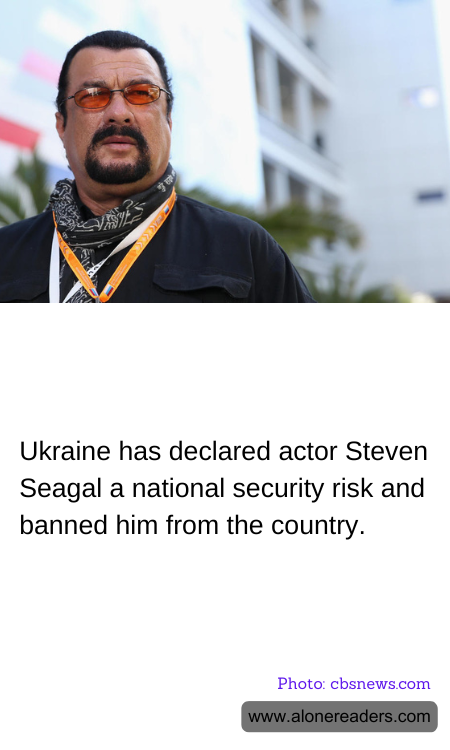
In a surprising turn of events, Ukraine has declared American actor and martial artist Steven Seagal a national security risk, effectively banning him from entering the country. This decision, which has garnered international attention, underscores the complex interplay between celebrity influence and geopolitical tensions.
Steven Seagal, known for his roles in action films such as "Under Siege" and "Above the Law," has been a controversial figure in recent years due to his outspoken support for Russian President Vladimir Putin. Seagal, who was granted Russian citizenship in 2016, has often been seen as a cultural ambassador of sorts, promoting Russian interests abroad. His close ties with the Kremlin have raised eyebrows, particularly in Ukraine, where tensions with Russia have been high since the annexation of Crimea in 2014 and the ongoing conflict in Eastern Ukraine.
The Ukrainian government's decision to ban Seagal is rooted in concerns over national security and public order. Officials have cited his public appearances and statements that seemingly endorse Russian policies, which they believe could be detrimental to Ukraine's sovereignty and territorial integrity. By labeling him a security risk, Ukraine aims to prevent any potential influence that Seagal might exert, which could be perceived as undermining the country's efforts to maintain its independence and security.
This move is part of a broader strategy by Ukraine to safeguard its national interests against perceived external threats. The country has previously banned other individuals who have expressed pro-Russian sentiments or have been involved in activities deemed harmful to Ukraine's national security. While some may view the ban on Seagal as an overreaction, it highlights the heightened sensitivity in Ukraine regarding foreign influence and the ongoing struggle to assert its autonomy in the face of Russian aggression.
The ban has sparked a range of reactions globally, with some defending Ukraine's right to protect its national interests, while others argue for the importance of cultural exchange and dialogue, even with controversial figures. For Seagal, this development adds another chapter to his complex international persona, which straddles the worlds of entertainment and geopolitics.
As the situation continues to unfold, it serves as a reminder of the intricate connections between celebrity, politics, and international relations. Ukraine's decision to ban Steven Seagal underscores the challenges faced by nations in navigating these intersections, particularly in regions marked by conflict and historical tensions. Whether this move will have any lasting impact on Ukraine's security or its relations with Russia remains to be seen, but it certainly highlights the unique role that public figures can play in the global political arena.
