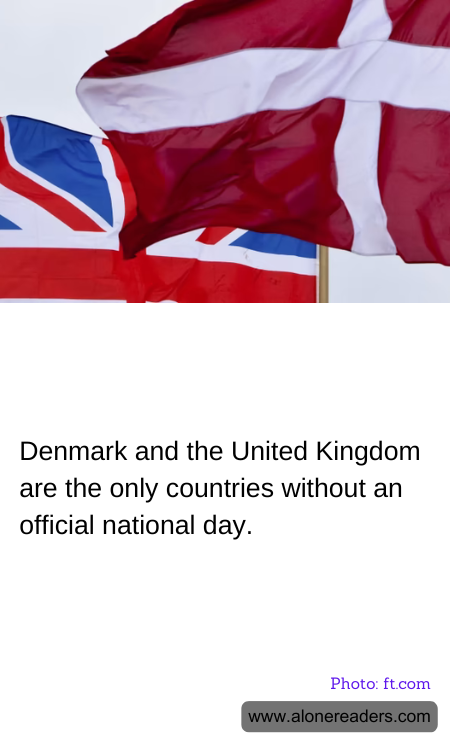
In a world where national pride is often celebrated with grand festivities and public holidays, Denmark and the United Kingdom stand out as unique exceptions. These two countries, rich in history and cultural heritage, do not have an official national day, a fact that might surprise many. While most nations have designated days to commemorate significant historical events or milestones, Denmark and the UK have taken a different approach to national celebration.
Denmark, known for its picturesque landscapes and vibrant cities, does not have a single day that is recognized as a national holiday. Instead, the Danes celebrate their national identity through a series of public holidays and cultural events spread throughout the year. One of the most significant celebrations is Constitution Day on June 5th, which marks the signing of the Danish constitution in 1849. Although it is not a public holiday, it is a day of political speeches and gatherings, reflecting Denmark's democratic values. Additionally, the Danes celebrate their monarchy on April 16th, the Queen's birthday, which is marked by various festivities and public appearances by the royal family.
Similarly, the United Kingdom, with its rich tapestry of traditions and history, does not have a single national day. The UK is a union of four distinct countries: England, Scotland, Wales, and Northern Ireland, each with its own patron saint's day. These days—St. George's Day for England, St. Andrew's Day for Scotland, St. David's Day for Wales, and St. Patrick's Day for Northern Ireland—are celebrated with varying degrees of enthusiasm and are not public holidays across the entire UK. The absence of a unified national day reflects the complex and diverse nature of the United Kingdom, where regional identities are as important as the collective British identity.
The lack of an official national day in both Denmark and the UK can be seen as a reflection of their unique cultural and historical contexts. In Denmark, the emphasis on democratic values and the monarchy plays a significant role in shaping national identity. In the UK, the diversity of its constituent countries and the emphasis on regional traditions contribute to the absence of a single national celebration. Instead of focusing on one day, both countries celebrate their heritage and identity through a variety of events and traditions throughout the year.
This approach to national celebration highlights the flexibility and adaptability of cultural identity. It suggests that national pride does not necessarily need to be confined to a single day of festivities. Instead, it can be expressed in various forms and at different times, allowing for a more inclusive and comprehensive celebration of what it means to be Danish or British. As global citizens continue to explore and appreciate different cultures, the examples of Denmark and the United Kingdom offer a refreshing perspective on how national identity can be celebrated in diverse and meaningful ways.
