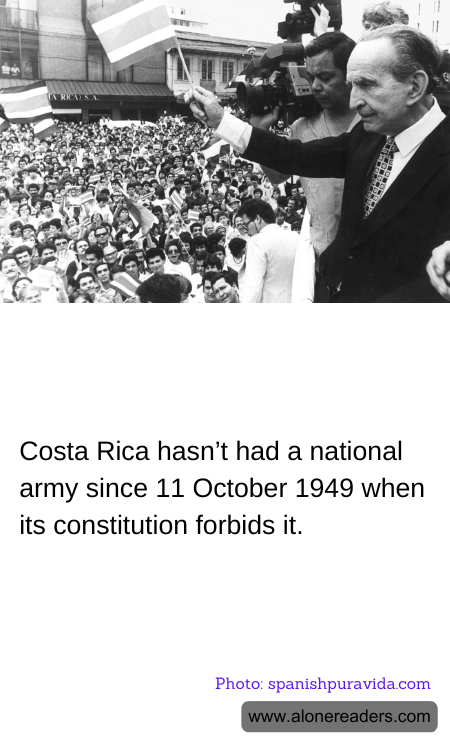
Costa Rica stands as a remarkable example of peace and stability in a world often marked by conflict and military might. This Central American nation made a groundbreaking decision on October 11, 1949, when it abolished its national army. This bold move was enshrined in its constitution, making Costa Rica one of the few countries in the world without a standing military force.
The decision to disband the army was largely influenced by the vision of José Figueres Ferrer, the then-president who believed that the resources spent on maintaining a military could be better utilized in fostering education, healthcare, and infrastructure. His foresight has paid dividends, as Costa Rica has since become one of the most stable and prosperous countries in the region. The absence of a military has allowed Costa Rica to allocate funds towards social programs, resulting in a high literacy rate, a robust healthcare system, and a strong emphasis on environmental conservation.
Costa Rica's commitment to peace has earned it a reputation as a neutral and diplomatic nation, often acting as a mediator in regional conflicts. The country hosts the Inter-American Court of Human Rights and the United Nations University for Peace, further cementing its role as a beacon of peace and human rights advocacy. This commitment is not just a political stance but a deeply ingrained part of the national identity, celebrated annually on December 1st as the Day of the Abolition of the Army.
The absence of a military has not left Costa Rica defenseless. Instead, the country relies on its police force for internal security and has established strong diplomatic ties and agreements with other nations to ensure its protection. This approach has allowed Costa Rica to focus on building a society that values education, innovation, and environmental stewardship. The country is a leader in eco-tourism and renewable energy, with a significant portion of its energy needs met through sustainable sources.
Costa Rica's decision to forgo a national army is a testament to the power of prioritizing peace and development over military strength. It serves as an inspiring model for other nations, demonstrating that security and prosperity can be achieved through diplomacy, education, and a commitment to the well-being of its citizens. As the world continues to grapple with conflicts and military expenditures, Costa Rica's example offers a hopeful reminder of the possibilities that arise when a nation chooses peace as its guiding principle.
