More About This Card
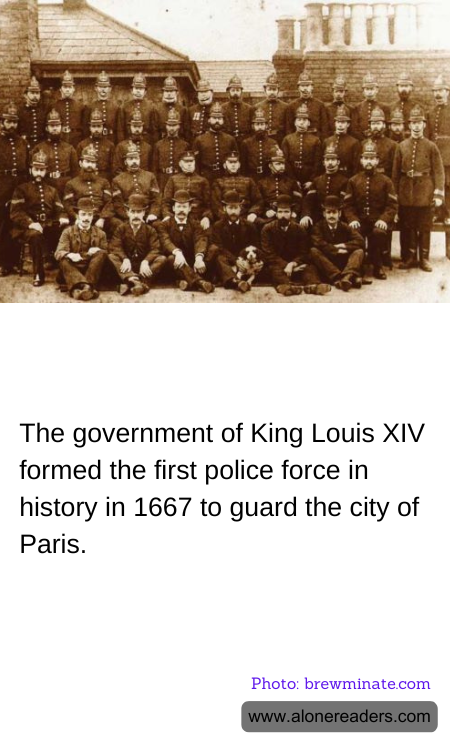
In the annals of history, the establishment of the first modern police force is a significant milestone, marking the evolution of organized law enforcement. This pivotal development occurred in 1667 under the reign of King Louis XIV of France, a monarch renowned for his centralizing policies and grandiose vision for his kingdom. The creation of this police force was a response to the growing need for maintaining order and security in Paris, a city that was rapidly expanding and becoming increasingly complex.
During the 17th century, Paris was a bustling metropolis, teeming with people and activity. However, with its growth came challenges such as crime, disorder, and the need for a structured system to manage the city's affairs. King Louis XIV, often referred to as the "Sun King," recognized the necessity of a dedicated force to oversee the safety and regulation of the capital. Thus, in 1667, he established the first police force, known as the "Lieutenant General of Police," a role initially filled by Gabriel Nicolas de La Reynie.
La Reynie's appointment marked the beginning of a new era in urban governance. His responsibilities were extensive, covering everything from crime prevention and public order to sanitation and street lighting. The police force under his command was tasked with patrolling the streets, investigating crimes, and ensuring the enforcement of laws. This initiative was not merely about curbing crime; it was also about creating a sense of order and predictability in a city that was the heart of French political and cultural life.
The establishment of this police force was a reflection of King Louis XIV's broader strategy of centralization and control. By placing the police under the direct authority of the monarchy, he ensured that the crown had a firm grip on the capital, reducing the power of local nobility and other potential sources of dissent. This move was part of Louis XIV's larger efforts to consolidate power and reinforce the absolute monarchy, which characterized his reign.
The impact of this early police force was profound, setting a precedent for modern policing systems worldwide. It introduced the concept of a professional, organized body dedicated to maintaining public order, a model that would be emulated and adapted by other cities and countries in the centuries to follow. The Paris police force became a prototype for future law enforcement agencies, illustrating the importance of a structured approach to urban management and public safety.
In conclusion, the formation of the first police force in Paris under King Louis XIV was a landmark event in the history of law enforcement. It not only addressed the immediate needs of a growing city but also laid the groundwork for modern policing practices. This initiative underscored the importance of maintaining order in urban environments and demonstrated the role of government in ensuring the safety and well-being of its citizens. As such, it remains a significant chapter in the story of how societies have evolved to protect and serve their communities.