More About This Card
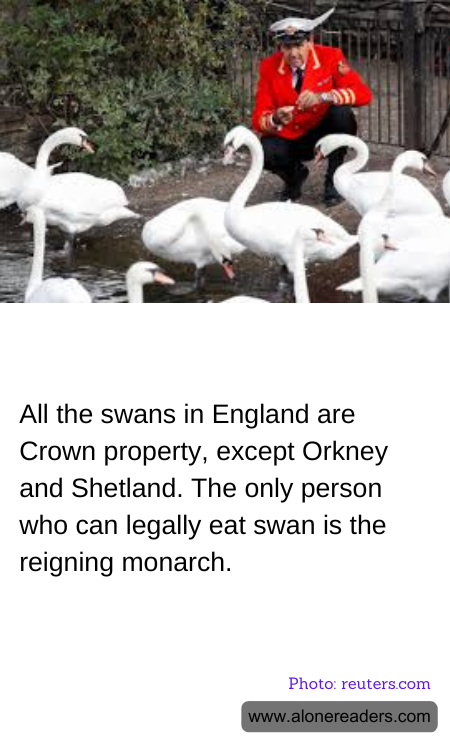
In the picturesque landscapes of England, swans glide gracefully across serene lakes and rivers, embodying elegance and tranquility. However, these majestic birds are not just a symbol of beauty; they are also steeped in tradition and law. In England, all swans are considered the property of the Crown, a unique status that dates back centuries. This royal prerogative, however, does not extend to the Orkney and Shetland Islands, where swans are not under the same jurisdiction.
The tradition of Crown ownership of swans can be traced back to the 12th century. During this time, swans were regarded as a delicacy, and their ownership was a privilege reserved for the monarchy and a few select individuals. The Crown's claim over swans was formalized to protect these birds from overhunting and to ensure their preservation. Today, the tradition continues, and the Queen's Swan Marker conducts an annual event known as "Swan Upping." This ceremonial practice involves counting and marking the swans on the River Thames, ensuring their well-being and maintaining the historical record.
While the swans are under the Crown's protection, the law surrounding their consumption is equally fascinating. The reigning monarch is the only person legally permitted to eat swan in the United Kingdom. This privilege is largely symbolic in modern times, as swans are no longer part of the royal menu. The law serves as a reminder of the historical significance of swans and their connection to the monarchy.
The exception to this rule lies in the Orkney and Shetland Islands, where swans are not considered Crown property. This distinction is likely due to historical and geographical factors, as these islands have maintained a degree of autonomy and have their own unique traditions and laws. The swans in these regions are free from the Crown's claim, highlighting the diversity of customs within the United Kingdom.
For visitors and residents alike, the sight of swans in England is a reminder of the country's rich history and the enduring legacy of its monarchy. The protection and reverence afforded to these birds reflect a deep respect for tradition and wildlife conservation. While the idea of swans as royal property may seem quaint, it underscores the importance of preserving cultural heritage and the natural world.
In conclusion, the story of England's swans is a fascinating blend of history, law, and tradition. It is a testament to the enduring influence of the monarchy and the country's commitment to preserving its natural beauty. Whether gliding across a tranquil lake or participating in the annual Swan Upping, these birds continue to captivate the imagination and symbolize the timeless elegance of the English landscape.