More About This Card
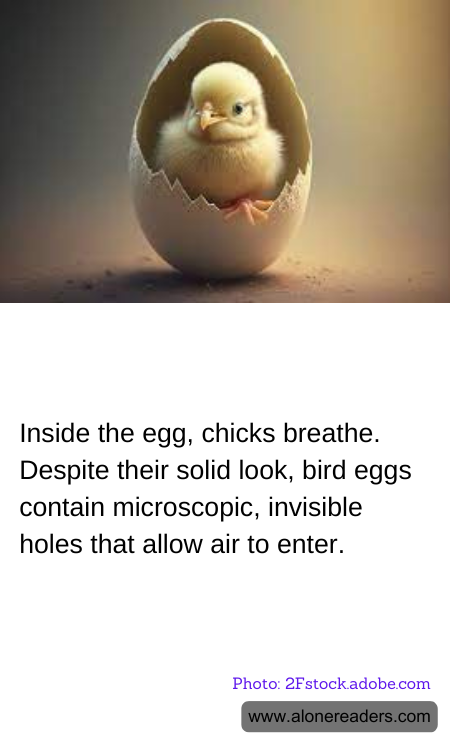
Bird eggs, with their seemingly solid and impenetrable shells, hold within them a fascinating secret: they are teeming with life and air. While the smooth, hard exterior of an egg might suggest a sealed environment, these shells are actually porous, containing thousands of microscopic holes that are invisible to the naked eye. These tiny openings play a crucial role in the development of the chick inside, allowing it to breathe and grow until it is ready to hatch.
The process begins when a bird lays its egg. The shell, composed primarily of calcium carbonate, is designed to be strong enough to protect the developing embryo from external threats, yet permeable enough to facilitate the exchange of gases. This delicate balance is achieved through the presence of these microscopic pores, which are distributed across the surface of the shell. On average, a chicken egg can have anywhere from 7,000 to 17,000 of these pores, depending on the species.
These pores serve as vital conduits for the exchange of oxygen and carbon dioxide. As the embryo develops, it consumes oxygen and produces carbon dioxide, much like any other living organism. The pores allow oxygen from the outside air to enter the egg, while simultaneously allowing carbon dioxide to escape. This exchange is essential for the chick's survival, as it ensures that the embryo receives the oxygen it needs to grow and develop properly.
The egg's internal environment is also carefully regulated to support the chick's development. The albumen, or egg white, acts as a protective cushion and provides water and protein, while the yolk supplies essential nutrients. As the chick grows, it absorbs these nutrients, and the air cell at the blunt end of the egg enlarges, providing a crucial air supply for the final stages of development. Just before hatching, the chick uses its beak to puncture the air cell, taking its first breath of air and preparing for the outside world.
This remarkable system highlights the intricate design of nature, where even the smallest details serve a purpose. The porous nature of bird eggshells is a testament to the delicate balance required for life to flourish. It is a reminder of the wonders of the natural world, where even the most seemingly mundane objects, like an egg, are filled with complexity and life.
Understanding the science behind how chicks breathe inside their eggs not only deepens our appreciation for the natural world but also underscores the importance of preserving the delicate ecosystems that support such life. As we continue to explore and learn from nature, we are reminded of the interconnectedness of all living things and the marvels that lie within even the simplest of forms.