More About This Card
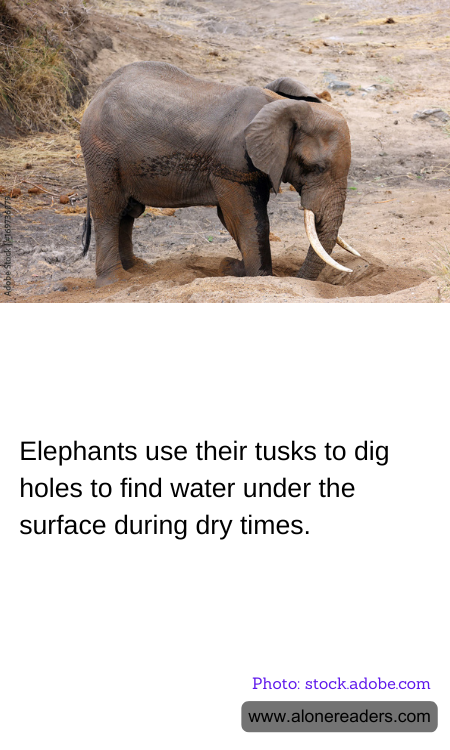
In the vast landscapes of Africa and parts of Asia, elephants, the gentle giants of the animal kingdom, demonstrate remarkable adaptability and intelligence, particularly during the harsh dry seasons. One of the most fascinating behaviors observed in these magnificent creatures is their ability to use their tusks to dig for water hidden beneath the earth's surface. This skill not only highlights their ingenuity but also plays a crucial role in their survival and the survival of other species sharing their habitat.
During dry periods, when water sources become scarce, elephants rely on their acute sense of smell and memory to locate underground water. Their tusks, which are elongated incisor teeth, serve as essential tools in this endeavor. With their powerful trunks and tusks, elephants can dig deep into the ground to reach water reserves that lie beneath the surface. This behavior is not only a testament to their intelligence but also to their physical strength and dexterity.
The process begins with elephants using their trunks to detect moisture in the soil. Once a suitable spot is identified, they employ their tusks to break through the hard, dry crust of the earth. This digging can create holes several feet deep, eventually reaching the water table. The elephants then use their trunks to siphon the water, quenching their thirst and ensuring their survival during the dry spells.
This ability to access hidden water sources is not only vital for the elephants themselves but also benefits other wildlife in the area. The water holes created by elephants often become a lifeline for various animals, including birds, antelopes, and even predators like lions, who rely on these newly formed water sources to sustain themselves. In this way, elephants play a crucial role in maintaining the delicate balance of their ecosystems, acting as environmental engineers who inadvertently support biodiversity.
Moreover, the digging behavior of elephants has a significant impact on the landscape. By breaking up the soil, they contribute to soil aeration and nutrient mixing, which can enhance plant growth once the rains return. This natural tilling process helps rejuvenate the land, promoting a healthier and more diverse ecosystem.
In conclusion, the ability of elephants to use their tusks to dig for water during dry times is a remarkable example of their adaptability and intelligence. This behavior not only ensures their survival but also supports the broader ecosystem, highlighting the interconnectedness of life in these regions. As we continue to learn more about these incredible creatures, it becomes increasingly clear that their presence is vital to the health and sustainability of their habitats. Protecting elephants and their natural environments is essential, not just for their sake, but for the myriad of species that depend on them.