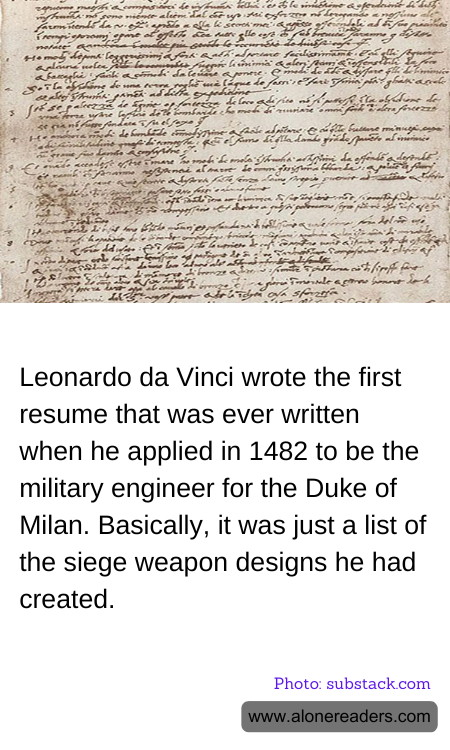
In the annals of history, Leonardo da Vinci is celebrated as a quintessential Renaissance man, renowned for his contributions to art, science, and engineering. However, one lesser-known aspect of his multifaceted genius is his role in crafting what is considered the first resume. In 1482, da Vinci penned a letter to Ludovico Sforza, the Duke of Milan, seeking employment as a military engineer. This document, which can be seen as the precursor to the modern resume, was essentially a list of his innovative siege weapon designs.
At the time, Milan was a city-state embroiled in frequent conflicts, and the demand for military innovation was high. Leonardo, recognizing an opportunity to apply his diverse skills, composed a succinct yet compelling letter that outlined his capabilities. Unlike today's resumes, which often highlight educational background and work experience, Leonardo's letter focused on his practical inventions and their potential applications in warfare. He detailed various machines he had designed, including catapults, armored vehicles, and other siege equipment, emphasizing their strategic advantages.
What makes Leonardo's resume particularly remarkable is its forward-thinking approach. He understood the importance of tailoring his message to the needs of his prospective employer. By focusing on his engineering prowess and the tangible benefits his inventions could bring to the Duke's military campaigns, Leonardo effectively marketed himself as a valuable asset. This strategic self-presentation is a testament to his understanding of human nature and the art of persuasion, skills that are as relevant today as they were in the 15th century.
Leonardo's application to the Duke of Milan was successful, and he spent the next 17 years in Milan, not only contributing to military projects but also creating some of his most famous artworks, including "The Last Supper." His ability to merge art and science, creativity and practicality, is a hallmark of his genius. The resume he crafted was not merely a list of achievements but a narrative of potential, a promise of innovation that he would indeed fulfill.
In today's world, where resumes are often standardized and formulaic, Leonardo da Vinci's approach serves as an inspiring reminder of the power of creativity and personalization. His ability to convey his unique talents and align them with the needs of his employer is a lesson in effective communication and self-promotion. Leonardo's resume is more than a historical curiosity; it is a pioneering document that underscores the timeless value of presenting one's skills and achievements in a way that resonates with the audience.
