More About This Card
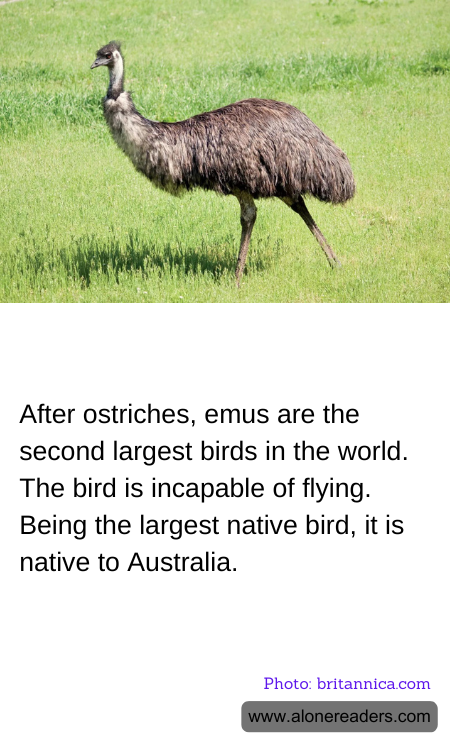
The emu, a fascinating creature native to Australia, holds the distinction of being the second largest bird in the world, surpassed only by the ostrich. Despite its impressive size, the emu is a flightless bird, a characteristic that adds to its unique charm and intrigue. Standing tall with a height that can reach up to six feet, the emu is a remarkable example of nature's diversity, showcasing features that are both captivating and distinctive.
Emus are part of the ratite family, a group of large, flightless birds that also includes ostriches, cassowaries, and kiwis. These birds have evolved to thrive without the ability to fly, adapting instead to life on the ground. The emu's powerful legs are a testament to this adaptation, allowing it to run at speeds of up to 30 miles per hour. This speed is not only a means of evading predators but also an essential part of their migratory lifestyle, as emus are known to travel long distances in search of food and water.
The emu's plumage is another fascinating aspect of its biology. Its feathers are soft and brown, providing excellent camouflage in the Australian outback. Unlike most birds, emu feathers grow in pairs from a single shaft, giving them a unique, shaggy appearance. This distinctive feather structure also helps regulate their body temperature, an essential feature for surviving the often harsh and variable climates of their native habitat.
Emus are omnivorous, with a diet that includes a wide variety of plants and insects. They play a crucial role in their ecosystem, aiding in seed dispersal and helping to maintain the balance of their environment. Their foraging habits ensure that they contribute to the health of the Australian landscape, making them an integral part of the natural world.
In addition to their ecological importance, emus hold cultural significance in Australia. They are featured in Aboriginal mythology and are a symbol of endurance and perseverance. The emu is even depicted on the Australian coat of arms, alongside the kangaroo, representing the country's unique wildlife and natural heritage.
Despite their inability to fly, emus have captured the imagination of people worldwide. Their impressive stature, unique adaptations, and cultural significance make them a subject of interest for scientists, nature enthusiasts, and the general public alike. As the largest native bird of Australia, the emu stands as a testament to the incredible diversity of life on our planet, reminding us of the wonders of evolution and the intricate balance of ecosystems. Whether observed in the wild or studied in research, the emu continues to be a symbol of the natural beauty and complexity of the world we live in.