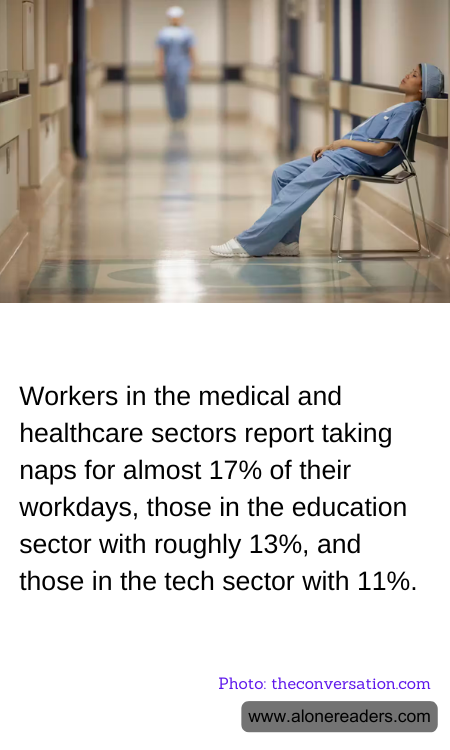
In recent years, the conversation around workplace productivity and employee well-being has increasingly included the topic of napping during work hours. A recent study has shed light on the prevalence of napping across various sectors, revealing that workers in the medical and healthcare sectors report taking naps for almost 17% of their workdays. This is followed by those in the education sector, who nap for roughly 13% of their workdays, and those in the tech sector, who nap for about 11%.
The high percentage of napping among medical and healthcare workers is not entirely surprising. These professionals often work long, irregular hours, sometimes in high-stress environments that demand constant alertness and quick decision-making. Napping can serve as a crucial tool to combat fatigue, improve cognitive function, and enhance overall performance. In fact, many hospitals and healthcare facilities have begun to recognize the importance of rest, providing designated nap areas for staff to recharge during their shifts.
In the education sector, teachers and administrative staff face their own unique set of challenges. The demands of managing classrooms, preparing lesson plans, and engaging with students can be mentally and physically exhausting. A short nap can help educators maintain their energy levels and focus, ultimately benefiting their students. Schools and educational institutions are increasingly acknowledging the benefits of rest, with some even implementing policies that allow for brief naps during the workday.
The tech sector, known for its fast-paced and innovative environment, also sees a significant number of employees taking naps. The nature of tech work often involves long hours in front of screens, which can lead to eye strain and mental fatigue. A quick nap can provide a much-needed break, allowing tech workers to return to their tasks with renewed creativity and problem-solving abilities. Tech companies, known for their progressive workplace cultures, are often at the forefront of promoting employee well-being, with many offering nap pods and quiet rooms for their staff.
The trend of workplace napping is gaining traction as more employers recognize its potential benefits. Research consistently shows that short naps can improve mood, increase alertness, and enhance performance. As the lines between work and personal life continue to blur, especially with the rise of remote work, the ability to take a restorative nap during the day can be a valuable tool for maintaining a healthy work-life balance.
In conclusion, napping during work hours is becoming an accepted practice across various sectors, driven by the need for improved employee well-being and productivity. As more organizations embrace this trend, it is likely that we will see a continued shift towards workplace cultures that prioritize rest and recovery, ultimately leading to happier, healthier, and more productive employees.
