More About This Card
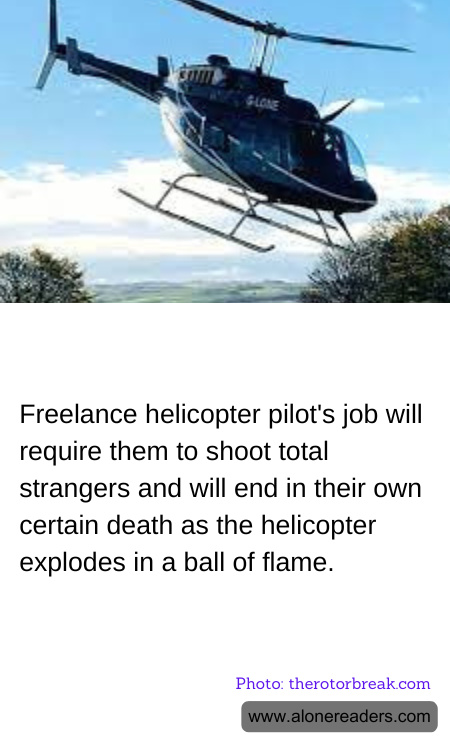
In the realm of freelance aviation, the role of a helicopter pilot is often associated with adventure, skill, and the freedom of the skies. However, a recent and controversial job listing has emerged, raising eyebrows and ethical concerns across the aviation community. This particular freelance helicopter pilot position comes with a chilling job description: the requirement to shoot total strangers and an ominous guarantee of the pilot's own demise as the helicopter explodes in a ball of flame.
The notion of a helicopter pilot being tasked with shooting strangers is not only alarming but also raises significant moral and legal questions. Traditionally, helicopter pilots are trained to prioritize safety, precision, and the well-being of their passengers and those on the ground. The idea of engaging in hostile actions from the cockpit contradicts the very essence of aviation ethics and the principles that guide pilots worldwide. Such a job description suggests a scenario more akin to a dystopian narrative than a legitimate employment opportunity.
Furthermore, the certainty of the pilot's death as the helicopter explodes adds a layer of tragedy and futility to the role. The aviation industry is built on the foundation of safety and risk management, with countless protocols in place to ensure the protection of both pilots and passengers. The concept of a mission that guarantees a fatal outcome is not only reckless but also deeply unsettling. It challenges the fundamental values of life preservation and the pursuit of safe and responsible aviation practices.
This job listing, whether real or hypothetical, serves as a stark reminder of the ethical boundaries that should never be crossed in any profession. It highlights the importance of maintaining integrity and humanity in the face of challenging and potentially dangerous situations. The aviation community, along with society at large, must remain vigilant against such exploitative and morally questionable opportunities that undermine the principles of safety and respect for human life.
In conclusion, the freelance helicopter pilot position described is a disturbing deviation from the norms of aviation. It underscores the need for ongoing dialogue about the ethical responsibilities of pilots and the importance of safeguarding the values that define the aviation industry. As we navigate the complexities of modern employment, it is crucial to uphold the standards that ensure the safety, dignity, and ethical conduct of all professionals, regardless of the field in which they operate.