More About This Card
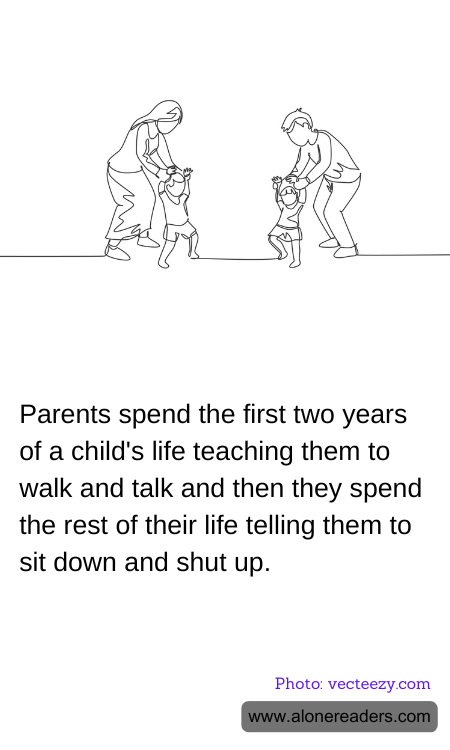
The journey of parenting is a fascinating paradox, filled with moments of joy, frustration, and profound love. One of the most intriguing aspects of this journey is the initial focus on teaching children to walk and talk, only to later find ourselves often asking them to sit down and be quiet. This paradox highlights the complex nature of parenting and the evolving relationship between parents and children as they grow.
In the early years, parents eagerly anticipate their child's first steps and words. These milestones are celebrated with enthusiasm, as they signify the child's growing independence and ability to interact with the world. Walking and talking are not just physical and verbal skills; they are gateways to exploration and communication. Parents invest time and energy into encouraging these developments, understanding that they are crucial for the child's growth and social integration.
However, as children grow older, the dynamics shift. The once-celebrated chatter and boundless energy can become overwhelming in the context of daily life. Parents find themselves in situations where they need to manage their child's behavior, often asking them to sit still or be quiet, especially in public settings or during important tasks. This shift is not about stifling the child's spirit but rather about teaching them the nuances of social behavior and the importance of context.
The transition from encouraging expression to managing it is a delicate balance. It reflects the broader challenge of parenting: nurturing a child's individuality while guiding them to understand societal norms and expectations. This balance is crucial for the child's development into a well-rounded individual who can navigate the complexities of life.
Moreover, this paradox underscores the importance of communication between parents and children. Open dialogue helps children understand why certain behaviors are encouraged in some situations and discouraged in others. It also allows parents to appreciate their child's perspective, fostering a relationship built on mutual respect and understanding.
Ultimately, the journey from teaching a child to walk and talk to guiding them on when to sit and listen is a testament to the evolving nature of parenting. It is a reminder that parenting is not just about teaching skills but also about imparting wisdom and values. As children grow, they learn to balance their own needs with those of the world around them, a lesson that begins with the simple acts of walking and talking and continues throughout their lives.