More About This Card
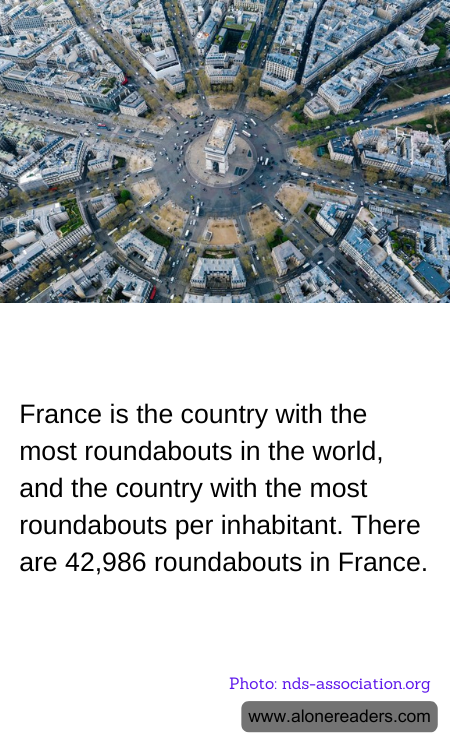
France, a country renowned for its rich history, exquisite cuisine, and iconic landmarks, holds a lesser-known but equally fascinating distinction: it is the country with the most roundabouts in the world. With an impressive total of 42,986 roundabouts, France not only leads in sheer numbers but also boasts the highest number of roundabouts per inhabitant. This unique aspect of French infrastructure has become an integral part of the nation's road network, influencing traffic flow and urban planning.
The prevalence of roundabouts in France can be traced back to the late 20th century when the country began to embrace this circular intersection design as a solution to traffic congestion and safety concerns. Roundabouts are known for their ability to reduce the likelihood of accidents compared to traditional intersections, as they encourage lower vehicle speeds and eliminate the possibility of head-on collisions. This safety advantage, combined with the efficient management of traffic flow, has made roundabouts a preferred choice for French urban planners and traffic engineers.
The widespread adoption of roundabouts in France is not merely a matter of practicality; it also reflects a cultural inclination towards harmony and order. The circular design of roundabouts embodies a sense of balance and continuity, resonating with the French appreciation for aesthetics and functionality. Moreover, roundabouts often serve as canvases for public art and landscaping, enhancing the visual appeal of urban and rural landscapes alike. This integration of art and infrastructure underscores the French commitment to creating environments that are both functional and beautiful.
In addition to their aesthetic and safety benefits, roundabouts contribute to environmental sustainability. By reducing the need for traffic signals and minimizing idling times, roundabouts help decrease fuel consumption and lower vehicle emissions. This aligns with France's broader efforts to promote eco-friendly practices and reduce its carbon footprint. As the world grapples with the challenges of climate change, the French model of roundabout-centric infrastructure offers valuable insights into how transportation systems can be designed to support environmental goals.
The sheer number of roundabouts in France also highlights the country's proactive approach to infrastructure development. By continuously investing in and expanding its network of roundabouts, France has demonstrated a commitment to improving the quality of life for its citizens. This dedication to infrastructure excellence not only enhances road safety and efficiency but also supports economic growth by facilitating smoother transportation of goods and people.
In conclusion, France's status as the country with the most roundabouts in the world is a testament to its innovative approach to traffic management and urban planning. The extensive network of roundabouts reflects a blend of practicality, cultural values, and environmental consciousness, making it a defining feature of the French landscape. As other nations look to improve their own transportation systems, France's experience with roundabouts offers a compelling model for creating safer, more efficient, and aesthetically pleasing road networks.