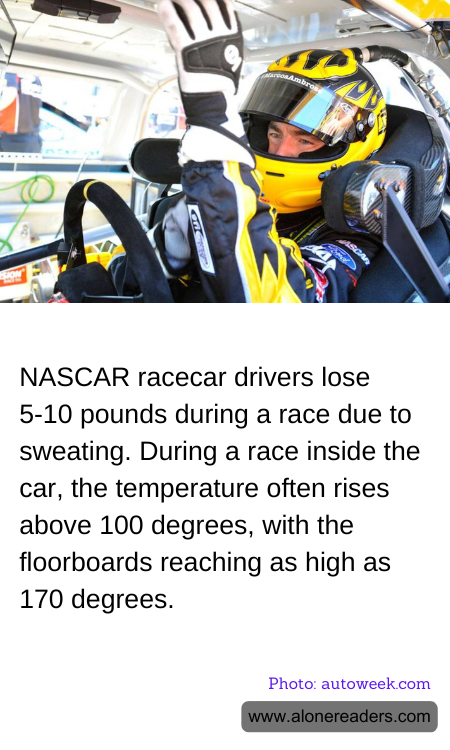
In the high-octane world of NASCAR, drivers are not only battling for position on the track but also contending with extreme physical conditions inside their racecars. It might come as a surprise to many that these athletes can lose between 5 to 10 pounds during a single race, primarily due to sweating. This significant weight loss is a testament to the intense heat and physical demands they endure.
Inside a NASCAR vehicle, temperatures can soar well above 100 degrees Fahrenheit. The confined space of the cockpit, combined with the heat generated by the engine and the friction of the tires on the track, creates an environment that is both challenging and potentially dangerous. The floorboards of these cars can reach a staggering 170 degrees, further contributing to the sweltering conditions. This extreme heat is not just uncomfortable; it poses a serious risk of dehydration and heat exhaustion, making it imperative for drivers to maintain their focus and stamina throughout the race.
To combat these conditions, NASCAR drivers undergo rigorous physical training and follow strict hydration protocols. Many drivers start hydrating days before a race, ensuring their bodies are well-prepared to handle the loss of fluids. During the race, they rely on specially designed hydration systems that allow them to drink water or electrolyte solutions without taking their hands off the wheel. This constant intake of fluids is crucial to maintaining their performance and preventing the dangerous effects of dehydration.
The physical demands of driving a NASCAR racecar extend beyond just managing heat. Drivers must maintain peak concentration and quick reflexes while navigating high-speed turns and avoiding collisions. The combination of mental and physical stress, coupled with the extreme temperatures, makes NASCAR one of the most demanding sports in the world. Despite these challenges, drivers are passionate about their sport and dedicated to pushing the limits of what is possible on the track.
For fans and aspiring drivers, understanding the physical toll of NASCAR racing adds a new layer of appreciation for the skill and endurance required to compete at this level. It highlights the importance of physical fitness and mental resilience in achieving success in motorsports. As technology and training methods continue to evolve, drivers are better equipped than ever to handle the rigors of racing, but the fundamental challenges of heat and endurance remain a defining aspect of the sport.
In conclusion, the weight loss experienced by NASCAR drivers during a race is a vivid illustration of the extreme conditions they face. The combination of high temperatures and physical exertion makes NASCAR racing a true test of human endurance and resilience. As fans cheer on their favorite drivers, they can now appreciate not only the speed and strategy on display but also the remarkable physical feats these athletes perform every time they take to the track.
