More About This Card
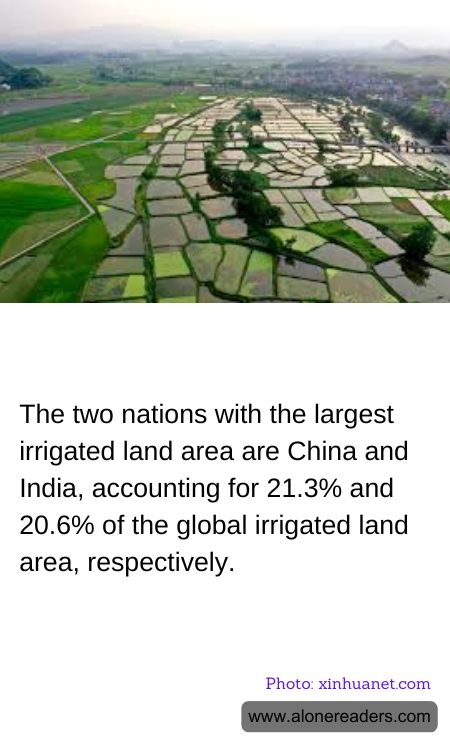
China and India, two of the world's most populous countries, are also leaders in agricultural innovation and productivity. Together, they account for a significant portion of the global irrigated land area, with China holding 21.3% and India 20.6%. This substantial share underscores the critical role these nations play in global food security and agricultural sustainability.
Irrigation is a vital component of agriculture, especially in regions where rainfall is insufficient or unpredictable. In China, the vast expanse of irrigated land supports the cultivation of rice, wheat, and other essential crops. The country's diverse climate and topography necessitate a variety of irrigation techniques, from traditional methods to modern, technologically advanced systems. The Chinese government has invested heavily in irrigation infrastructure, recognizing its importance in boosting agricultural output and ensuring food security for its massive population.
Similarly, India relies heavily on irrigation to support its agricultural sector, which is a cornerstone of the country's economy. The Indian subcontinent experiences a wide range of climatic conditions, from arid regions to areas with heavy monsoons. This variability makes irrigation crucial for maintaining consistent crop yields. The Green Revolution of the 1960s and 70s marked a significant turning point for Indian agriculture, with the introduction of high-yield crop varieties and improved irrigation techniques. Today, India continues to expand its irrigation capabilities, employing both traditional methods like canal irrigation and modern technologies such as drip and sprinkler systems.
The extensive use of irrigation in China and India not only supports their domestic food needs but also contributes to their roles as major agricultural exporters. These nations supply a variety of crops to the global market, including rice, wheat, cotton, and tea. Their ability to produce large quantities of food is essential in meeting the demands of a growing global population.
However, the reliance on irrigation also presents challenges. Both countries face issues related to water scarcity and the sustainable management of water resources. Over-extraction of groundwater, inefficient irrigation practices, and pollution are significant concerns that need to be addressed to ensure the long-term viability of their agricultural sectors. Efforts are underway in both nations to promote water conservation, improve irrigation efficiency, and adopt sustainable agricultural practices.
In conclusion, China and India's dominance in global irrigated land area highlights their pivotal roles in agriculture. Their commitment to expanding and improving irrigation infrastructure is crucial for sustaining their populations and contributing to global food security. As these countries continue to innovate and address the challenges of water management, they set an example for other nations striving to balance agricultural productivity with environmental sustainability.