More About This Card
In the heart of the arid Sahara Desert lies one of the most ambitious engineering feats of the 20th century: the Great Man-made River (GMR) in Libya. This colossal irrigation project stands as a testament to human ingenuity and determination, transforming the barren desert landscape into a source of life and sustenance. The GMR is recognized as the largest irrigation project in the world, and its scale and impact are nothing short of extraordinary.
The Great Man-made River project was conceived in the 1980s under the leadership of Libya's then-leader, Muammar Gaddafi. The primary aim was to address the severe water scarcity issues faced by the country, which is predominantly desert. The project taps into the vast reserves of fossil water stored in the Nubian Sandstone Aquifer System, a network of ancient underground aquifers that have accumulated over thousands of years. This precious resource is extracted through more than 1,300 wells, some of which reach depths of over 500 meters.
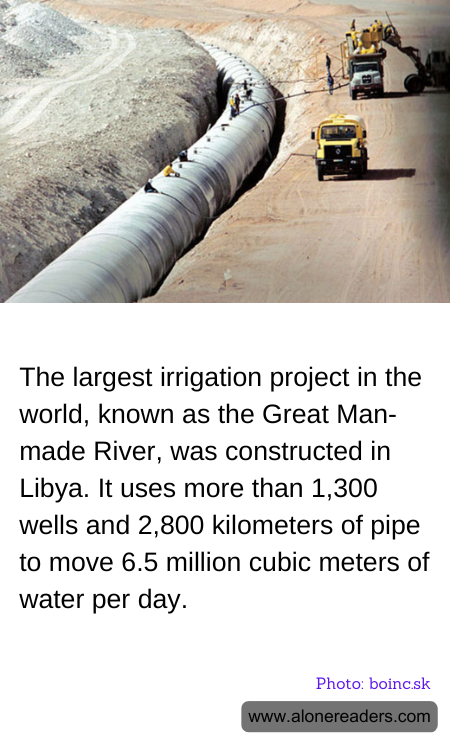
The water is then transported across the country through an extensive network of pipelines, stretching over 2,800 kilometers. These pipelines are designed to withstand the harsh desert conditions and deliver a staggering 6.5 million cubic meters of water per day. This water is primarily used for agricultural purposes, enabling the cultivation of crops in regions that were once inhospitable to farming. The GMR has significantly boosted Libya's agricultural output, reducing the country's reliance on food imports and enhancing food security.
Beyond agriculture, the Great Man-made River also supplies water to urban areas, providing a vital resource for millions of Libyans. Cities such as Tripoli, Benghazi, and Sirte benefit from the project, ensuring that residents have access to clean and reliable water supplies. This has improved living standards and supported economic development in a country where water scarcity has long been a critical challenge.
Despite its successes, the Great Man-made River project is not without its challenges. The extraction of fossil water is not sustainable in the long term, as these aquifers are not replenished at a rate that matches the current levels of extraction. Additionally, the project has faced logistical and maintenance issues, exacerbated by political instability and conflict in the region. These challenges underscore the need for sustainable water management practices and the exploration of alternative water sources, such as desalination and water recycling.
The Great Man-made River remains a remarkable achievement, demonstrating the potential of large-scale engineering projects to address critical resource shortages. It serves as a reminder of the importance of innovation and collaboration in tackling global challenges, particularly in regions where natural resources are scarce. As the world continues to grapple with water scarcity and climate change, the lessons learned from the GMR project will be invaluable in shaping future efforts to secure water resources for generations to come.