More About This Card
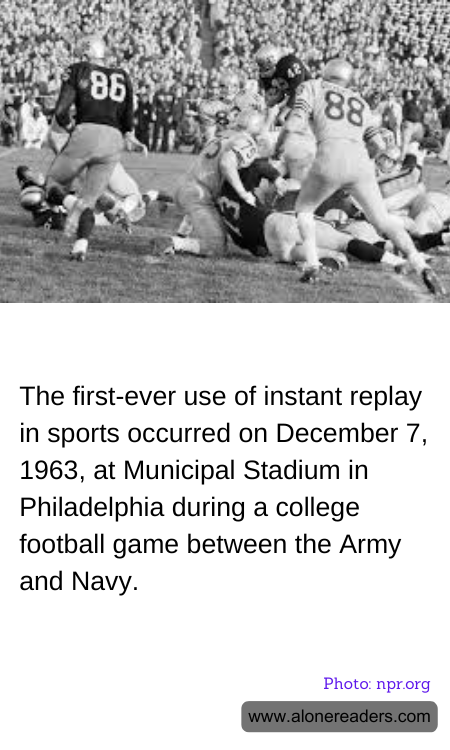
On December 7, 1963, a groundbreaking moment in sports broadcasting unfolded at Municipal Stadium in Philadelphia during the annual college football game between the Army and Navy. This event marked the first-ever use of instant replay, a technological innovation that would forever change the way audiences experience sports. The introduction of instant replay not only enhanced the viewing experience but also set a precedent for future advancements in sports broadcasting.
The concept of instant replay was the brainchild of Tony Verna, a young and innovative CBS television director. Verna's vision was to provide viewers with a more dynamic and engaging way to watch sports by allowing them to see key plays again, almost immediately after they happened. Despite the technical challenges of the time, Verna was determined to bring his idea to life. Using a modified videotape machine, he managed to overcome the limitations of the existing technology, which was not originally designed for such quick playback.
During the Army-Navy game, Verna's team successfully executed the first instant replay, replaying a touchdown by Army quarterback Rollie Stichweh. As the replay aired, the announcer, Lindsey Nelson, had to clarify to the audience that they were watching a replay and not another live play, as the concept was entirely new to viewers. This moment of confusion highlighted the novelty of the technology, but it also underscored its potential to transform sports broadcasting.
The introduction of instant replay was met with enthusiasm and intrigue, as it allowed fans to relive the excitement of pivotal moments and provided commentators with a tool to analyze plays in greater detail. Over time, instant replay became an integral part of sports coverage, evolving with advancements in technology to offer multiple angles, slow-motion replays, and high-definition clarity. It has also played a crucial role in officiating, helping to ensure fair play by allowing referees to review and confirm critical decisions.
The legacy of that December day in 1963 is evident in the way sports are consumed today. Instant replay has become a staple not only in football but across a wide range of sports, enhancing the spectator experience and adding a layer of depth to the analysis of games. Tony Verna's innovation paved the way for a new era in sports broadcasting, demonstrating the power of technology to enrich our understanding and enjoyment of athletic competition.
As we reflect on the origins of instant replay, it is clear that this innovation has had a lasting impact on the world of sports. It serves as a reminder of the importance of creativity and perseverance in the face of technical challenges, and it continues to inspire new generations of broadcasters and technologists to push the boundaries of what is possible in sports media.