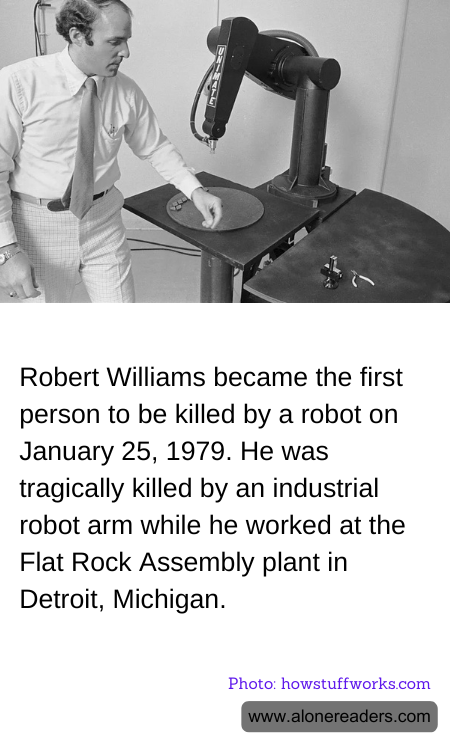
On January 25, 1979, a tragic incident marked a significant moment in the history of industrial automation and safety. Robert Williams, a 25-year-old worker at the Flat Rock Assembly plant in Detroit, Michigan, became the first known person to be killed by a robot. This unfortunate event unfolded when Williams was struck by the arm of a one-ton industrial robot while retrieving parts from a storage rack.
The robot, designed to retrieve castings from high shelves, was part of an automated system intended to increase efficiency and reduce human labor in the plant. However, the technology of the time was still in its infancy, and safety protocols were not as advanced as they are today. On that fateful day, the robot malfunctioned, and Williams, who was manually retrieving parts due to the robot's slow pace, was struck in the head, resulting in his immediate death.
This incident highlighted the potential dangers of industrial automation and underscored the need for stringent safety measures when working alongside robotic systems. It served as a wake-up call for industries worldwide, prompting a reevaluation of safety standards and the implementation of more comprehensive safety protocols to protect workers from similar accidents.
The aftermath of Williams' death led to a lawsuit against the robot's manufacturer, Litton Industries. The court ruled in favor of Williams' family, awarding them $10 million in damages. The case emphasized the responsibility of manufacturers to ensure the safety of their products and the importance of designing systems that prioritize human safety.
In the years following this tragic event, significant advancements have been made in the field of robotics and workplace safety. Modern industrial robots are equipped with advanced sensors, emergency stop functions, and safety barriers to prevent accidents. Additionally, rigorous safety training and protocols have become standard practice in facilities that utilize robotic technology.
Robert Williams' death, while tragic, served as a catalyst for change in the industrial sector. It reminded the world of the importance of balancing technological advancement with human safety. As we continue to integrate more sophisticated machines into our workplaces, the lessons learned from this incident remain relevant, urging us to prioritize the well-being of workers as we embrace the future of automation.
