More About This Card
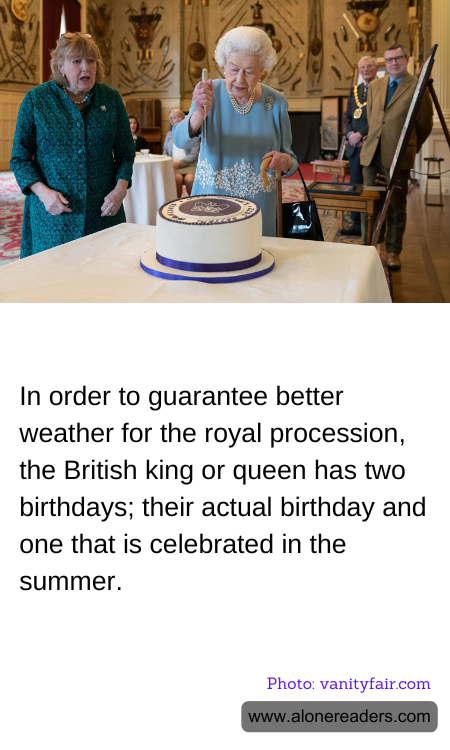
The tradition of the British monarch having two birthdays is a fascinating aspect of royal customs, steeped in history and practicality. This unique practice is not merely a quirk of royal privilege but a strategic decision rooted in the unpredictable British weather. The reigning monarch celebrates their actual birthday on the date they were born, while the official birthday is marked on a separate day, usually in the summer, to ensure more favorable weather conditions for public celebrations.
The origins of this tradition can be traced back to the reign of King George II in 1748. Born in November, King George II faced the challenge of celebrating his birthday during a time of year when the weather was often too cold and wet for outdoor festivities. To remedy this, he decided to combine his birthday celebration with the annual Trooping the Colour parade, which was held in the summer. This decision set a precedent that has been followed by subsequent monarchs, allowing for grand public celebrations that are less likely to be dampened by inclement weather.
The Trooping the Colour parade, which marks the official birthday of the British sovereign, is a spectacular event that showcases the pomp and pageantry of the British monarchy. Held annually in June, it features a procession of the Household Division, including the Foot Guards and the Household Cavalry, along with a fly-past by the Royal Air Force. The event is attended by members of the royal family and watched by thousands of spectators, both in person and on television. The choice of a summer date ensures that the parade can be enjoyed in the best possible conditions, with the likelihood of sunshine and clear skies.
This tradition underscores the importance of public celebration and national unity in the British monarchy. By having an official birthday in the summer, the monarch can engage with the public in a grand and memorable way, reinforcing the bond between the crown and its subjects. It also allows for a more inclusive celebration, as people from all over the country can participate in or watch the festivities without the hindrance of poor weather.
In essence, the practice of having two birthdays is a testament to the adaptability and foresight of the British monarchy. It highlights the balance between personal milestones and public duty, ensuring that the celebration of the monarch's life is both a personal and national affair. This tradition continues to be a cherished part of British culture, symbolizing the enduring connection between the monarchy and the people.