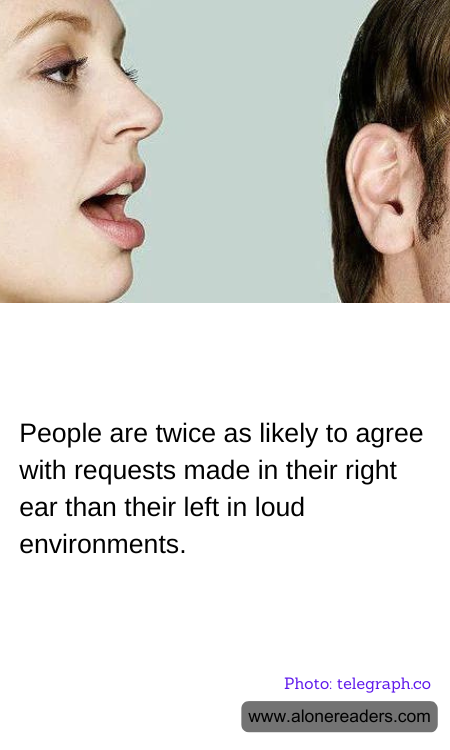
In the bustling environments of our daily lives, where noise often competes for our attention, the subtle nuances of human interaction can sometimes go unnoticed. One such intriguing phenomenon is the tendency for people to be more receptive to requests made in their right ear compared to their left, particularly in loud settings. This curious aspect of human behavior has been the subject of various studies, shedding light on how our brains process auditory information and how it influences our decision-making.
The preference for the right ear in processing requests is rooted in the way our brains are wired. The human brain is divided into two hemispheres, each responsible for different functions. The left hemisphere, which is typically associated with language processing and analytical tasks, is connected to the right ear. This connection means that information received through the right ear is processed more efficiently and quickly, especially in environments where clarity and speed are crucial. In contrast, the right hemisphere, linked to the left ear, is more involved in creative and spatial tasks, which may not be as advantageous when deciphering verbal requests in noisy settings.
Research has shown that in environments filled with competing sounds, such as crowded restaurants or busy streets, individuals are twice as likely to comply with requests made to their right ear. This phenomenon can be attributed to the brain's need to prioritize and streamline auditory processing when faced with a barrage of noise. By favoring the right ear, the brain can more effectively filter and interpret verbal cues, leading to a higher likelihood of agreement or compliance with the request.
Understanding this auditory preference can have practical applications in various fields, from marketing to interpersonal communication. For instance, salespeople or negotiators might find it beneficial to position themselves on a client's right side when making a pitch or proposal in a noisy environment. Similarly, educators and public speakers could enhance their effectiveness by being mindful of their audience's auditory preferences, ensuring that their messages are heard and understood more clearly.
While this right-ear advantage may seem like a small detail, it underscores the complexity of human communication and the intricate ways in which our brains navigate the world around us. By recognizing and harnessing these subtle cues, we can improve our interactions and enhance our ability to connect with others, even amidst the chaos of everyday life. As we continue to explore the depths of human cognition, such insights remind us of the remarkable adaptability and sophistication of the human mind.
