More About This Card
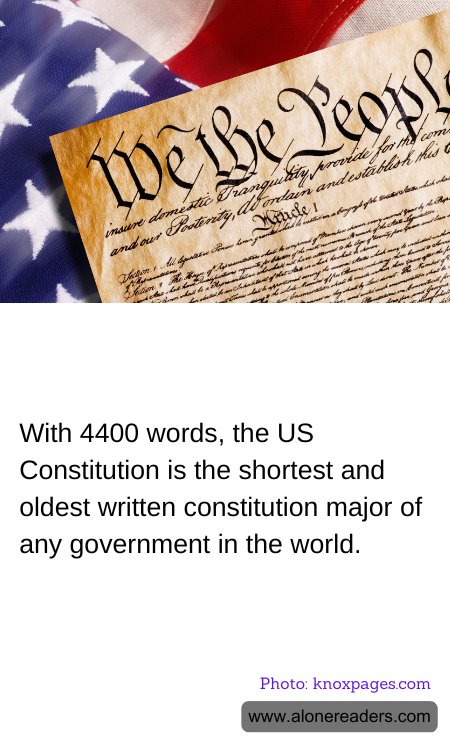
The United States Constitution, with its succinct 4,400 words, stands as a remarkable document in the annals of governance. Not only is it the shortest written constitution of any major government in the world, but it is also the oldest, having been ratified on September 17, 1787. This brevity and longevity are testaments to the foresight of its framers and the enduring principles it enshrines.
Drafted in the wake of the American Revolution, the Constitution was designed to unify a fledgling nation and provide a framework for governance that balanced power among the states and the federal government. Its concise nature reflects the framers' intent to create a flexible document that could adapt to changing times while maintaining core principles of democracy and liberty. The Constitution's preamble sets the stage with its famous opening words, "We the People," emphasizing that the government derives its power from the consent of the governed.
Despite its brevity, the Constitution has proven remarkably resilient and adaptable. It established a system of checks and balances among the three branches of government—executive, legislative, and judicial—ensuring that no single branch could dominate the others. This structure has allowed the United States to navigate numerous challenges and changes over the centuries, from civil wars to civil rights movements, while maintaining a stable democratic system.
The Constitution's ability to endure is also due in part to its amendment process, which allows for changes and additions to be made as needed. Since its ratification, the Constitution has been amended 27 times, addressing issues such as voting rights, presidential term limits, and the abolition of slavery. This adaptability has enabled the document to remain relevant and responsive to the evolving needs of American society.
Moreover, the Constitution's influence extends far beyond the borders of the United States. It has served as a model for numerous other countries seeking to establish democratic governance, inspiring constitutional frameworks around the world. Its principles of individual rights, separation of powers, and federalism have been emulated and adapted to suit diverse cultural and political contexts.
In an era where many constitutions are lengthy and complex, the U.S. Constitution's brevity is a reminder of the power of simplicity and clarity in governance. Its enduring legacy is a testament to the vision of its framers and the strength of the democratic ideals it embodies. As the oldest written constitution still in use, it continues to guide and inspire, proving that a few well-chosen words can indeed shape the course of history.