More About This Card
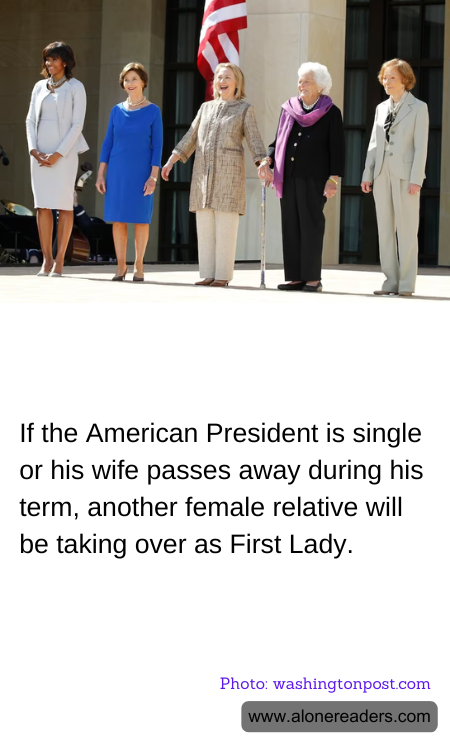
The role of the First Lady of the United States is a unique and significant position, often filled by the President's spouse. However, history and tradition have shown that if the President is single or if the First Lady passes away during the President's term, another female relative can step in to fulfill the duties associated with this esteemed role. This practice underscores the flexibility and adaptability of the position, ensuring that the ceremonial and social responsibilities of the First Lady are maintained.
The First Lady's role, while not officially defined by law, is deeply rooted in American tradition. It encompasses a wide range of duties, from hosting state functions and championing social causes to representing the United States on the global stage. When a President is unmarried or loses his spouse, the absence of a First Lady could leave a significant gap in the White House's social and ceremonial functions. To address this, it has become customary for another female relative, such as a sister, daughter, or niece, to assume the responsibilities of the First Lady.
This practice is not without precedent. For instance, during the presidency of Thomas Jefferson, who was a widower, his daughter Martha Jefferson Randolph often served as the White House hostess. Similarly, James Buchanan, the only bachelor President, relied on his niece, Harriet Lane, to fulfill the role. These women not only managed the social calendar of the White House but also left their mark on the position, advocating for various causes and influencing public opinion.
The involvement of a female relative as First Lady allows for continuity in the White House's social and diplomatic engagements. It ensures that the President can focus on governance without the added concern of managing the social aspects of the presidency. Moreover, it highlights the importance of family support in the demanding life of a President, showcasing the adaptability of the First Lady's role to accommodate different family dynamics.
In modern times, the role of the First Lady has evolved to include advocacy on national and international issues, making the position more visible and influential than ever before. Whether the First Lady is the President's spouse or another female relative, the individual in this role has the opportunity to shape public discourse and contribute to the administration's legacy.
In conclusion, the tradition of a female relative stepping in as First Lady when the President is single or loses his spouse is a testament to the resilience and adaptability of this important role. It ensures that the White House continues to function smoothly and that the President has the necessary support to lead effectively. This practice not only honors the historical significance of the First Lady's position but also reflects the evolving nature of family roles in the highest office of the land.