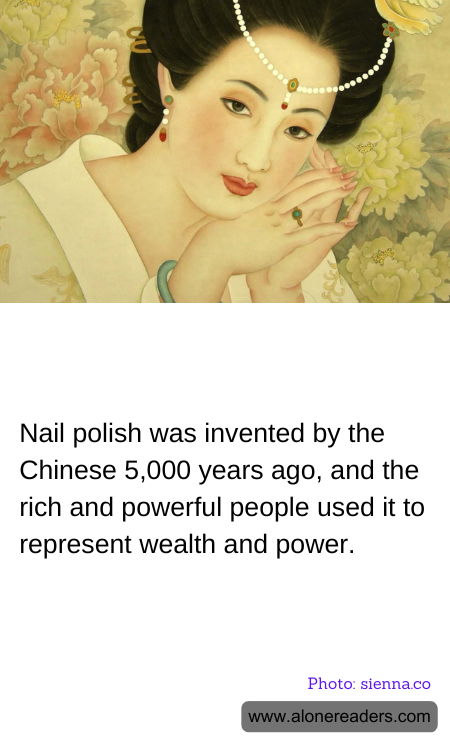
Nail polish, a staple in modern beauty routines, has a rich history that dates back over 5,000 years to ancient China. This cosmetic innovation was not merely a tool for personal adornment but a significant symbol of wealth and power. The origins of nail polish are deeply intertwined with the cultural and social hierarchies of ancient Chinese society, where it served as a marker of status and prestige.
In ancient China, nail polish was crafted from a blend of natural ingredients, including beeswax, egg whites, gelatin, and vegetable dyes. These early formulations were far removed from the quick-drying, vibrant lacquers we know today, yet they held immense cultural significance. The colors used in these polishes were not chosen merely for aesthetic appeal but were imbued with symbolic meaning. For instance, gold and silver were favored by the ruling classes during the Zhou Dynasty, reflecting their divine right to rule and their connection to the celestial order.
The use of nail polish was predominantly reserved for the elite, with the colors and styles often dictated by one's social standing. During the Ming Dynasty, red and black became the colors of choice for the royal family, further emphasizing the exclusivity of nail adornment. The intricate designs and rich hues were a visual representation of one's wealth and influence, with the length and condition of the nails themselves serving as a testament to a life of leisure, free from manual labor.
As time progressed, the tradition of nail decoration spread beyond the confines of the Chinese aristocracy, influencing neighboring cultures and eventually making its way to the Western world. However, the core idea of nail polish as a symbol of status remained intact. In many societies, the ability to maintain well-manicured nails was a luxury afforded only to those with the means to do so, reinforcing the notion that beauty and power were closely linked.
Today, nail polish is accessible to people from all walks of life, yet its historical roots as a symbol of wealth and power continue to resonate. The colors and designs chosen by individuals can still convey personal style and status, echoing the practices of ancient Chinese nobility. While the materials and methods have evolved, the essence of nail polish as a form of self-expression and a marker of identity remains unchanged.
The journey of nail polish from its ancient origins to its modern-day ubiquity is a testament to its enduring appeal and cultural significance. It serves as a reminder of how beauty practices can transcend time and geography, continually adapting while retaining their core symbolic meanings. As we paint our nails today, we participate in a tradition that spans millennia, connecting us to a rich tapestry of history and human expression.
