More About This Card
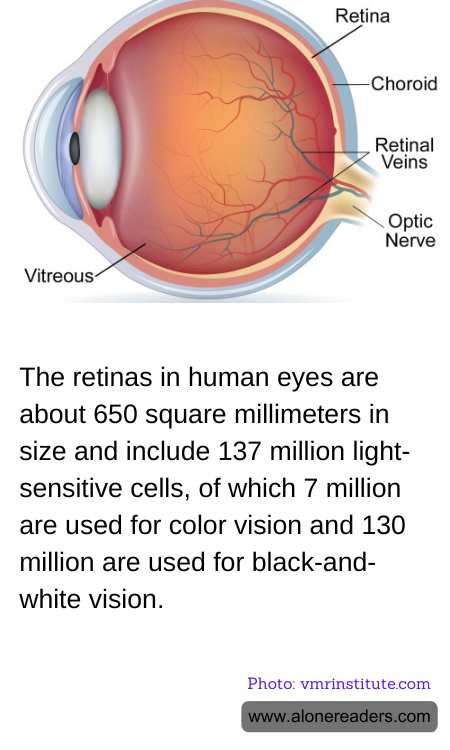
The human eye is a marvel of biological engineering, a complex organ that allows us to perceive the world in vibrant detail. At the heart of this intricate system lies the retina, a thin layer of tissue that lines the back of the eye. Despite its delicate nature, the retina is a powerhouse of visual processing, covering an area of approximately 650 square millimeters and housing an astonishing 137 million light-sensitive cells. These cells are crucial for converting light into the electrical signals that our brains interpret as images.
The retina's light-sensitive cells are divided into two main types: rods and cones. Rods, numbering about 130 million, are responsible for black-and-white vision and are highly sensitive to low light levels. This makes them essential for night vision and peripheral vision, allowing us to detect movement and shapes in dimly lit environments. The sheer number of rods ensures that we can navigate and respond to our surroundings even when light is scarce.
In contrast, the 7 million cone cells are specialized for color vision and function best in bright light. Cones are concentrated in the central part of the retina, known as the macula, with the highest density in the fovea, a small pit that provides the sharpest vision. These cells enable us to perceive a wide spectrum of colors and fine details, playing a crucial role in activities such as reading, recognizing faces, and appreciating the nuances of art and nature.
The interplay between rods and cones allows the human eye to adapt to varying light conditions and provides a seamless transition between day and night vision. This adaptability is a testament to the evolutionary refinement of our visual system, enabling humans to thrive in diverse environments. The retina's ability to process such a vast amount of visual information with remarkable speed and accuracy is a key factor in our survival and success as a species.
Understanding the structure and function of the retina not only highlights the complexity of human vision but also underscores the importance of eye health. Conditions that affect the retina, such as macular degeneration or retinitis pigmentosa, can significantly impair vision and quality of life. Advances in medical research and technology continue to improve our ability to diagnose and treat retinal disorders, offering hope for those affected by these conditions.
In conclusion, the retina is a vital component of the human visual system, with its 137 million light-sensitive cells working tirelessly to provide us with the gift of sight. Whether it's the vibrant colors of a sunset or the subtle shades of a moonlit night, the retina allows us to experience the world in all its visual splendor. As we continue to explore the intricacies of the eye, we gain a deeper appreciation for the remarkable capabilities of this small yet mighty organ.