More About This Card
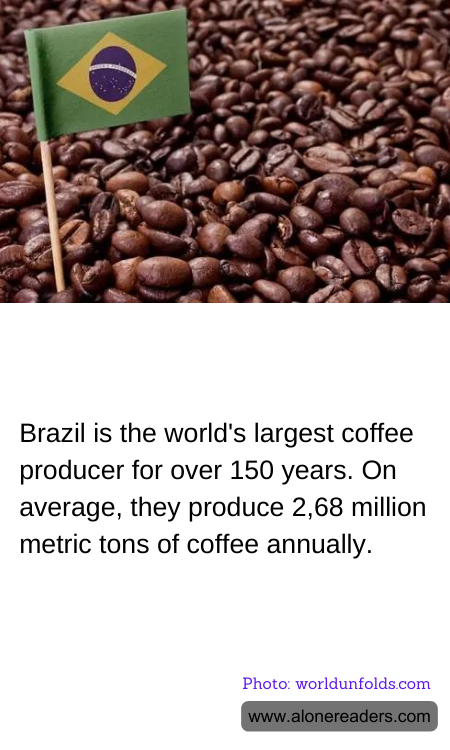
For over a century and a half, Brazil has held the prestigious title of being the world's largest coffee producer, a testament to its rich agricultural heritage and favorable growing conditions. This South American giant has consistently dominated the global coffee market, producing an impressive average of 2.68 million metric tons of coffee annually. This remarkable achievement is not only a reflection of Brazil's vast and fertile landscapes but also its deep-rooted cultural connection to coffee cultivation.
The story of Brazil's coffee industry is one of tradition, innovation, and resilience. Coffee was first introduced to Brazil in the early 18th century, and since then, it has become an integral part of the country's economy and identity. The nation's diverse climates and topographies provide ideal conditions for coffee cultivation, from the lush, rolling hills of Minas Gerais to the expansive plantations of São Paulo and Paraná. These regions, among others, contribute significantly to Brazil's coffee output, each offering unique flavors and qualities that cater to a wide range of palates.
Brazil's coffee production is characterized by a blend of traditional farming methods and modern agricultural practices. The country has embraced technological advancements to enhance productivity and sustainability, ensuring that its coffee remains competitive on the global stage. From mechanized harvesting to innovative processing techniques, Brazilian coffee producers are continually adapting to meet the demands of an ever-evolving market. This commitment to excellence has not only solidified Brazil's position as a coffee powerhouse but also set a benchmark for other coffee-producing nations.
The impact of Brazil's coffee industry extends beyond its borders, influencing global coffee trends and prices. As the largest exporter of coffee, Brazil plays a pivotal role in shaping the international coffee market. The country's ability to produce large quantities of high-quality coffee beans ensures a steady supply for coffee lovers worldwide, from the bustling cafes of Europe to the artisanal roasteries of North America. This global reach underscores the importance of Brazil's coffee industry, both economically and culturally.
Despite its success, Brazil's coffee sector faces challenges, including climate change and fluctuating market demands. However, the resilience and adaptability of Brazilian coffee farmers continue to drive the industry forward. By investing in sustainable practices and exploring new coffee varieties, Brazil is poised to maintain its leadership in the coffee world for years to come.
In conclusion, Brazil's status as the world's largest coffee producer is a testament to its rich history, favorable growing conditions, and commitment to innovation. The country's ability to produce millions of metric tons of coffee annually is not just a feat of agricultural prowess but also a reflection of its enduring passion for coffee. As Brazil continues to navigate the challenges and opportunities of the global coffee market, its legacy as a coffee titan remains firmly intact, delighting coffee enthusiasts around the world with each aromatic cup.