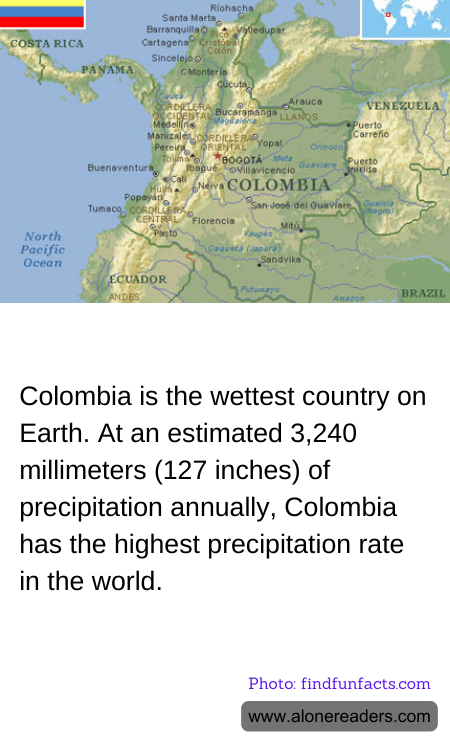
Colombia, a country renowned for its vibrant culture and rich biodiversity, holds the unique distinction of being the wettest country on Earth. With an astounding average annual precipitation of approximately 3,240 millimeters (127 inches), Colombia surpasses all other nations in terms of rainfall. This remarkable climatic feature is not just a statistic but a defining characteristic that shapes the country's diverse ecosystems and influences the daily lives of its inhabitants.
The geographical diversity of Colombia plays a significant role in its high precipitation levels. The country is home to a variety of landscapes, including the Andes Mountains, Amazon rainforest, and Pacific and Caribbean coastlines. These varied terrains create a complex climate system where moist air from the Pacific Ocean and the Caribbean Sea converges with the cooler air from the Andes, resulting in frequent and heavy rainfall. The Chocó region, located along the Pacific coast, is particularly notable for its intense rainfall, often cited as one of the wettest places on the planet.
This abundance of rain supports Colombia's rich biodiversity, making it one of the most biologically diverse countries in the world. The lush rainforests, sprawling wetlands, and fertile valleys provide habitats for countless species of plants and animals, many of which are endemic to the region. The constant supply of water ensures that these ecosystems thrive, contributing to Colombia's status as a global biodiversity hotspot.
However, the high levels of precipitation also present challenges. Frequent and intense rainfall can lead to natural disasters such as floods and landslides, particularly in areas with steep terrain. These events can have devastating impacts on communities, infrastructure, and agriculture. The Colombian government and local communities have had to adapt to these conditions, implementing measures to mitigate the effects of excessive rainfall and improve resilience against natural disasters.
Despite these challenges, the abundant rainfall is also a boon for agriculture, one of Colombia's key economic sectors. The fertile soil and ample water supply allow for the cultivation of a wide range of crops, including coffee, bananas, and flowers, which are major exports. The agricultural sector benefits from the consistent rainfall, which reduces the need for irrigation and supports sustainable farming practices.
Colombia's status as the wettest country on Earth is a testament to its unique geographical and climatic conditions. While the heavy rainfall presents certain challenges, it also fosters an environment of unparalleled natural beauty and biodiversity. As Colombia continues to navigate the complexities of its climate, it remains a country where the rain is both a blessing and a challenge, shaping the land and the lives of those who call it home.
