More About This Card
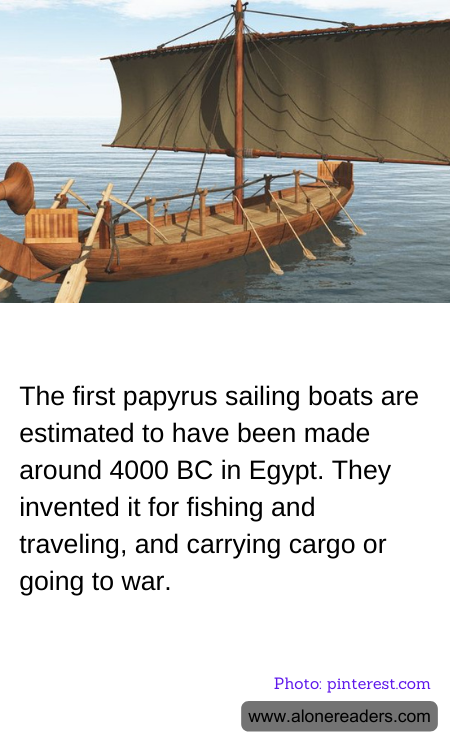
The ancient Egyptians, known for their remarkable innovations and contributions to civilization, are credited with the creation of the first papyrus sailing boats around 4000 BC. These early vessels were not only a testament to human ingenuity but also a pivotal development in the history of transportation and trade. Crafted from the abundant papyrus reeds that lined the banks of the Nile River, these boats played a crucial role in the daily lives of the Egyptians, serving multiple purposes that ranged from fishing and travel to carrying cargo and even engaging in warfare.
Papyrus, a versatile and buoyant material, was ideally suited for boat construction. The Egyptians harvested the tall, fibrous reeds, which were then bound together to form the hulls of their boats. These lightweight yet sturdy vessels were propelled by sails made from linen, allowing them to harness the power of the wind. The design of these boats was simple yet effective, enabling the Egyptians to navigate the Nile's waters with ease. The river, a lifeline for the civilization, provided a natural highway that facilitated trade and communication between different regions, contributing significantly to the economic and cultural development of ancient Egypt.
Fishing was one of the primary uses of these papyrus boats. The Nile teemed with fish, providing a vital source of food for the Egyptian people. Fishermen would set out in their boats, casting nets and lines to capture the abundant aquatic life. The boats' maneuverability and ease of use made them ideal for this purpose, allowing fishermen to access various parts of the river and its tributaries. Beyond fishing, these boats were essential for transportation, enabling people to travel between settlements and engage in trade. The ability to transport goods such as grain, pottery, and textiles along the Nile was crucial for the economy, fostering connections between communities and promoting the exchange of ideas and culture.
In addition to their peaceful applications, papyrus boats were also employed in warfare. The Egyptians recognized the strategic advantage of controlling the Nile, and their boats became an integral part of military campaigns. These vessels allowed for the rapid movement of troops and supplies, providing a tactical edge in conflicts. The use of papyrus boats in warfare underscores their versatility and importance in ancient Egyptian society.
The invention of papyrus sailing boats marked a significant milestone in human history, reflecting the resourcefulness and adaptability of the ancient Egyptians. These boats not only facilitated the practical needs of fishing, travel, and trade but also played a role in the defense and expansion of their civilization. As we look back on this remarkable achievement, we gain insight into the ingenuity of a people who harnessed the natural resources available to them, laying the foundation for future advancements in maritime technology. The legacy of the papyrus sailing boats endures, reminding us of the enduring impact of ancient innovations on the course of human history.