More About This Card
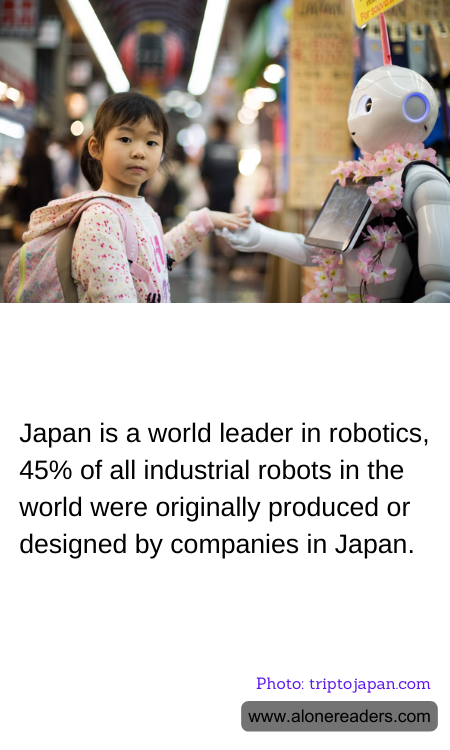
Japan has long been recognized as a global powerhouse in the field of robotics, a reputation that is well-deserved given the country's significant contributions to the industry. With 45% of all industrial robots worldwide being originally produced or designed by Japanese companies, the nation stands at the forefront of technological innovation and automation. This remarkable achievement is not only a testament to Japan's engineering prowess but also highlights its commitment to advancing technology for industrial and societal benefits.
The roots of Japan's leadership in robotics can be traced back to its post-war era, where the nation focused on rebuilding its economy through technological advancement. Japanese companies like FANUC, Yaskawa Electric Corporation, and Kawasaki Heavy Industries have been pioneers in developing cutting-edge robotic technologies that have revolutionized manufacturing processes across the globe. These companies have consistently pushed the boundaries of what is possible, creating robots that are not only efficient and reliable but also capable of performing complex tasks with precision.
One of the key factors contributing to Japan's dominance in the robotics sector is its emphasis on research and development. The Japanese government, along with private enterprises, invests heavily in R&D to foster innovation and maintain a competitive edge. This investment has led to the development of advanced robotics technologies, such as collaborative robots (cobots) that work alongside humans, and autonomous robots that can operate independently in various environments. These innovations have not only enhanced productivity in industries like automotive, electronics, and logistics but have also paved the way for robots to be integrated into everyday life.
Moreover, Japan's cultural affinity for robotics has played a significant role in its leadership position. The Japanese society's acceptance and fascination with robots have encouraged the development of humanoid robots and service robots designed to assist in healthcare, eldercare, and hospitality. This cultural embrace of robotics is evident in popular media, where robots are often depicted as friendly and helpful companions, further fueling public interest and acceptance.
Japan's influence in the robotics industry extends beyond its borders, as its technologies and expertise are sought after by countries worldwide. Japanese robots are known for their quality, durability, and advanced capabilities, making them a preferred choice for industries looking to automate their processes. This global demand has solidified Japan's position as a leader in the export of robotic technologies, contributing significantly to its economy.
In conclusion, Japan's leadership in the robotics industry is a result of decades of dedication to innovation, research, and cultural acceptance of technology. As the world continues to move towards increased automation and the integration of robotics into various sectors, Japan's role as a pioneer and leader in this field is likely to grow even more prominent. With its continued focus on developing advanced robotic solutions, Japan is set to remain at the cutting edge of this transformative industry, shaping the future of robotics on a global scale.