More About This Card
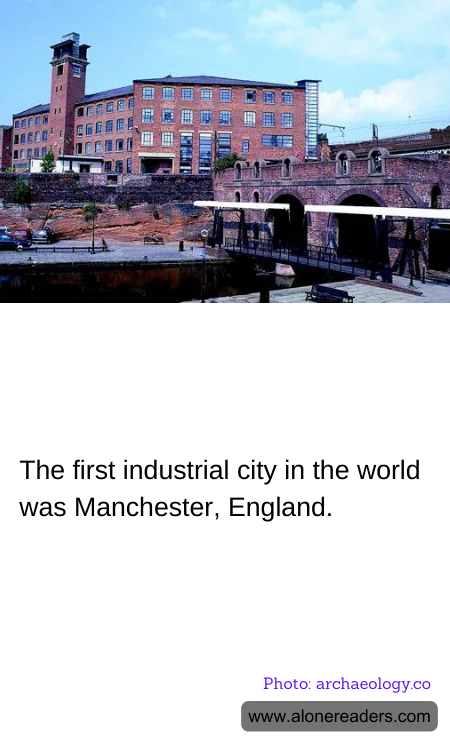
Manchester, England, holds the distinguished title of being the world's first industrial city, a status it achieved during the Industrial Revolution in the late 18th and early 19th centuries. This transformation was driven by a combination of technological innovation, geographical advantages, and a burgeoning population, which together created a perfect storm for industrial growth.
The seeds of Manchester's industrial prowess were sown with the advent of the textile industry. The city became synonymous with cotton, earning the nickname "Cottonopolis." The damp climate of Manchester was ideal for cotton spinning, as it prevented the fibers from breaking. This natural advantage was complemented by the development of the water frame by Richard Arkwright and the spinning mule by Samuel Crompton, both of which revolutionized textile manufacturing. These inventions allowed for the mass production of cotton goods, which were in high demand both domestically and internationally.
Manchester's location also played a crucial role in its industrial ascent. Situated near the coalfields of Lancashire, the city had easy access to the essential fuel needed to power steam engines, which were becoming increasingly vital to industrial operations. Additionally, the construction of the Bridgewater Canal in 1761 provided a direct link to the port of Liverpool, facilitating the import of raw cotton and the export of finished textiles. This infrastructure development significantly reduced transportation costs and time, further enhancing Manchester's industrial capabilities.
The rapid industrialization of Manchester attracted a large workforce, leading to a population boom. People from rural areas flocked to the city in search of employment opportunities, transforming Manchester into a bustling urban center. This influx of labor was crucial in sustaining the city's factories and mills, which operated around the clock to meet the growing demand for manufactured goods.
However, the rapid growth of Manchester was not without its challenges. The city became notorious for its overcrowded living conditions, pollution, and poor sanitation. These issues were vividly captured by Friedrich Engels in his seminal work, "The Condition of the Working Class in England," which highlighted the stark contrast between the wealth generated by industrialization and the squalor endured by many of its workers.
Despite these challenges, Manchester's legacy as the first industrial city is undeniable. It set a precedent for urban industrialization, influencing cities worldwide. The innovations and developments that took root in Manchester during the Industrial Revolution laid the groundwork for modern industrial practices and urban planning.
Today, Manchester continues to thrive as a vibrant city, blending its rich industrial heritage with a modern, diverse economy. Its history as the world's first industrial city remains a point of pride and a testament to the transformative power of innovation and industry.