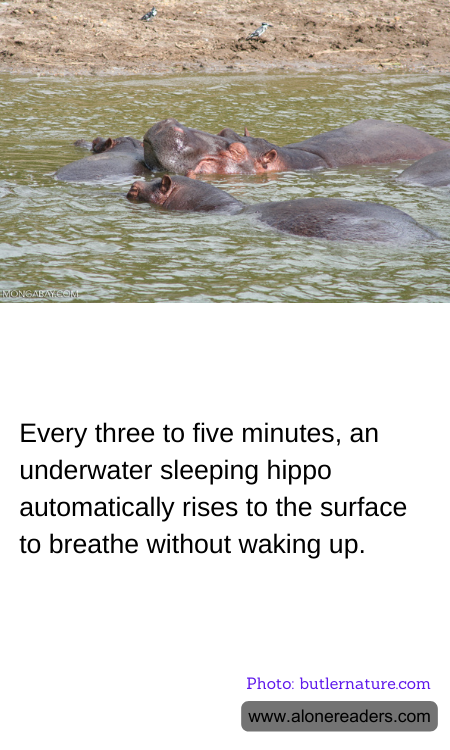
In the serene waters of African rivers and lakes, a fascinating natural phenomenon unfolds every few minutes. The hippopotamus, a creature often associated with its massive size and formidable presence, exhibits a unique behavior that captivates both scientists and nature enthusiasts alike. Every three to five minutes, a sleeping hippo, submerged underwater, rises to the surface to breathe, all without waking up. This remarkable ability is a testament to the hippo's evolutionary adaptations and offers a glimpse into the wonders of the animal kingdom.
Hippos, or Hippopotamus amphibius, are semi-aquatic mammals that spend a significant portion of their lives in water. Despite their bulky appearance, they are surprisingly agile swimmers. Their ability to sleep underwater is facilitated by an involuntary reflex that allows them to rise to the surface, take a breath, and sink back down without regaining consciousness. This automatic action is akin to the way humans breathe while asleep, but with the added complexity of navigating the aquatic environment.
The hippo's unique breathing mechanism is crucial for its survival. In the wild, these animals face numerous threats, including predators and environmental challenges. By being able to sleep underwater, hippos can remain hidden from potential dangers while still fulfilling their respiratory needs. This adaptation also helps them regulate their body temperature, as the water provides a cooling effect in the often sweltering African climate.
Beyond its practical benefits, the hippo's breathing behavior is a marvel of nature's ingenuity. It highlights the intricate balance of life in ecosystems where each species has evolved distinct traits to thrive. For young hippos, this ability is instinctual, as calves are born with the innate capacity to hold their breath and nurse underwater. This ensures that even the youngest members of the species can adapt to their aquatic lifestyle from the moment they enter the world.
The hippo's automatic breathing is not only a subject of scientific interest but also a source of wonder for those who observe these majestic creatures in their natural habitat. It serves as a reminder of the complexity and beauty of the natural world, where even the most seemingly mundane actions are the result of millions of years of evolution.
In a world where human activity increasingly encroaches on wildlife habitats, understanding and appreciating such behaviors is more important than ever. The hippo's ability to rise and breathe without waking is a small but significant example of the delicate interplay between life and environment. It encourages us to look closer at the natural world and to cherish the incredible adaptations that allow species to survive and flourish. As we continue to learn from these remarkable creatures, we are reminded of the importance of preserving the ecosystems that support such extraordinary life forms.
