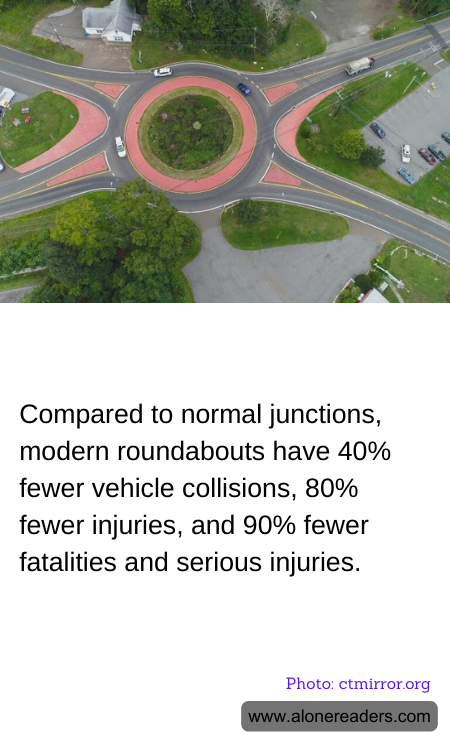
In recent years, the adoption of modern roundabouts has gained momentum as a safer and more efficient alternative to traditional intersections. These circular junctions, which require vehicles to travel counterclockwise around a central island, have been shown to significantly reduce the number and severity of traffic incidents. Compared to conventional intersections, modern roundabouts boast 40% fewer vehicle collisions, 80% fewer injuries, and an impressive 90% reduction in fatalities and serious injuries. These statistics highlight the transformative impact roundabouts can have on road safety.
One of the primary reasons roundabouts are so effective is their design, which naturally slows down traffic. Unlike traditional intersections where vehicles may speed up to beat a red light, roundabouts require drivers to yield upon entry and navigate the circle at a reduced speed. This decrease in speed not only minimizes the likelihood of collisions but also reduces the severity of any accidents that do occur. The continuous flow of traffic in a roundabout eliminates the need for traffic signals, which can often lead to rear-end collisions when drivers are caught off guard by sudden stops.
Moreover, the circular design of roundabouts virtually eliminates the possibility of head-on and high-speed right-angle collisions, which are common at traditional intersections and often result in severe injuries or fatalities. Instead, any collisions that do occur in roundabouts tend to be low-speed sideswipes, which are far less likely to cause serious harm. This inherent safety feature makes roundabouts particularly effective in reducing the number of serious injuries and fatalities on the road.
In addition to safety benefits, roundabouts also contribute to improved traffic flow and reduced congestion. The continuous movement of vehicles through the intersection means that traffic is less likely to back up, even during peak hours. This efficiency not only saves time for drivers but also reduces vehicle emissions, contributing to a cleaner environment. Furthermore, the absence of traffic lights means that roundabouts continue to function smoothly during power outages, providing an added layer of reliability.
Despite these advantages, the transition to roundabouts can sometimes be met with resistance from drivers unfamiliar with their operation. However, studies have shown that once drivers become accustomed to using roundabouts, they appreciate the safety and efficiency benefits they offer. Public education campaigns and clear signage can help ease this transition and encourage wider acceptance of roundabouts as a superior alternative to traditional intersections.
In conclusion, modern roundabouts represent a significant advancement in road safety and traffic management. Their ability to drastically reduce collisions, injuries, and fatalities makes them an invaluable tool in creating safer roads for everyone. As more communities recognize these benefits, the adoption of roundabouts is likely to continue, paving the way for a future where road travel is not only more efficient but also significantly safer.
