More About This Card
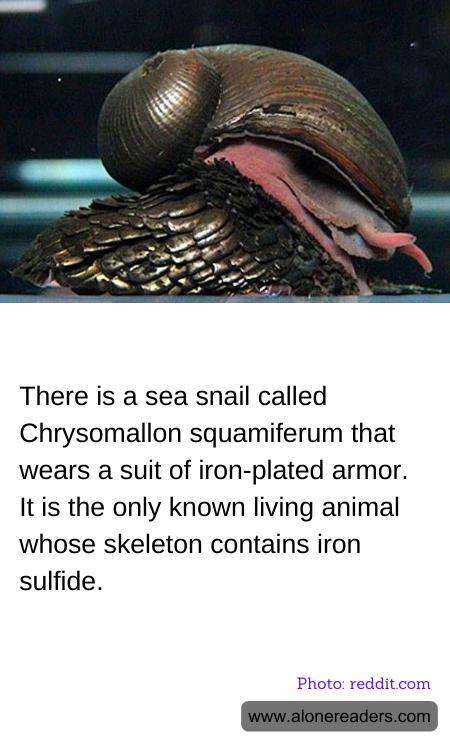
In the mysterious depths of the Indian Ocean, near hydrothermal vents, resides a remarkable creature that seems to have emerged from the pages of a science fiction novel. This extraordinary sea snail, known as Chrysomallon squamiferum, or the scaly-foot gastropod, boasts a unique adaptation that sets it apart from all other known living animals. It wears a suit of iron-plated armor, making it a subject of fascination for scientists and nature enthusiasts alike.
The scaly-foot gastropod's most striking feature is its shell, which is fortified with iron sulfide. This mineral composition is unprecedented in the animal kingdom, as it is the only known living organism whose skeleton contains this metallic compound. The iron sulfide gives the snail's shell a dark, metallic sheen, providing it with a formidable defense against predators. This natural armor is not just for show; it serves a critical function in the snail's survival in the harsh environment of hydrothermal vents, where temperatures can fluctuate dramatically, and the pressure is immense.
The snail's habitat is as intriguing as its armor. Hydrothermal vents are fissures on the seafloor that emit geothermally heated water, rich in minerals. These vents create a unique ecosystem, teeming with life that thrives in conditions that would be inhospitable to most other organisms. The scaly-foot gastropod has adapted to this extreme environment, relying on symbiotic bacteria that live in its gills. These bacteria convert the chemicals from the vent fluids into energy, providing sustenance for the snail in a process known as chemosynthesis.
The discovery of Chrysomallon squamiferum has sparked interest in the scientific community, not only because of its unique armor but also due to its potential implications for understanding evolutionary biology and biomineralization. Researchers are keen to study how this snail's iron-plated shell developed and what it can teach us about the adaptation of life in extreme environments. Moreover, the scaly-foot gastropod's ability to incorporate iron sulfide into its shell could inspire new materials and technologies, particularly in fields like bioengineering and materials science.
Despite its robust armor, the scaly-foot gastropod faces threats from human activities. Deep-sea mining, which targets the mineral-rich deposits around hydrothermal vents, poses a significant risk to this unique species and its fragile ecosystem. Conservationists are advocating for measures to protect these deep-sea habitats, emphasizing the importance of preserving the biodiversity that thrives in such extreme conditions.
In conclusion, the scaly-foot gastropod is a testament to the incredible adaptability of life on Earth. Its iron-plated armor not only captivates our imagination but also challenges our understanding of biological processes. As we continue to explore the depths of our oceans, creatures like Chrysomallon squamiferum remind us of the wonders that lie beneath the waves and the importance of safeguarding these hidden realms for future generations.