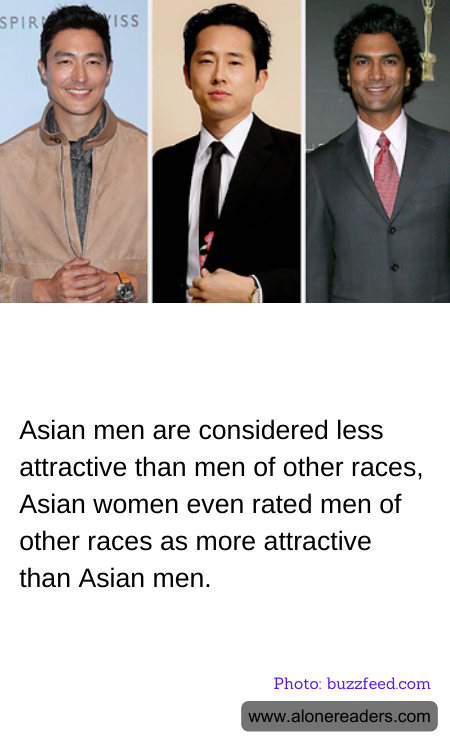
The perception of attractiveness is a complex and multifaceted issue, often influenced by cultural, societal, and media-driven narratives. In recent years, there has been a growing conversation around the stereotypes and biases that affect how Asian men are perceived in terms of attractiveness. This topic is particularly nuanced, as it intersects with issues of race, identity, and cultural representation.
Historically, Asian men have been subject to a range of stereotypes that have contributed to their portrayal as less attractive compared to men of other races. These stereotypes often depict Asian men as passive, nerdy, or lacking in masculinity, which can be traced back to early Western media portrayals and have persisted over time. Such representations have had a significant impact on societal perceptions, often overshadowing the diverse and multifaceted realities of Asian men.
Interestingly, studies and surveys have shown that even within the Asian community, Asian women sometimes rate men of other races as more attractive than their Asian counterparts. This phenomenon can be attributed to a variety of factors, including internalized stereotypes and the influence of Western beauty standards, which often prioritize certain physical traits that are less commonly associated with Asian men. The global dominance of Western media has played a significant role in shaping these standards, often sidelining the diverse beauty found within Asian cultures.
However, it is essential to recognize that these perceptions are not universal and are gradually changing. The rise of Asian representation in global media, with figures like actors and musicians gaining international acclaim, is challenging outdated stereotypes and broadening the narrative around Asian masculinity. This shift is helping to redefine what is considered attractive, emphasizing individuality and cultural diversity.
Moreover, the conversation around attractiveness is increasingly acknowledging the subjective nature of beauty. Attraction is deeply personal and varies widely among individuals, influenced by personal experiences, cultural background, and individual preferences. As society becomes more inclusive and diverse, there is a growing recognition of the importance of embracing a wide range of beauty standards that reflect the world's rich cultural tapestry.
In conclusion, while the perception that Asian men are less attractive than men of other races persists in some circles, it is a narrative that is being actively challenged and redefined. By promoting diverse representations and celebrating individuality, society can move towards a more inclusive understanding of attractiveness that transcends outdated stereotypes and embraces the beauty inherent in all cultures.
