More About This Card
In the bustling metropolis of New York City, where skyscrapers pierce the sky and the streets are alive with the hum of millions, there exists a somber reality that many are unaware of. For those who pass away without financial means or family to claim them, their final resting place is not a traditional cemetery, but rather a small island in the Long Island Sound known as Hart Island. This island serves as the city’s potter’s field, a burial ground for the unclaimed and indigent.
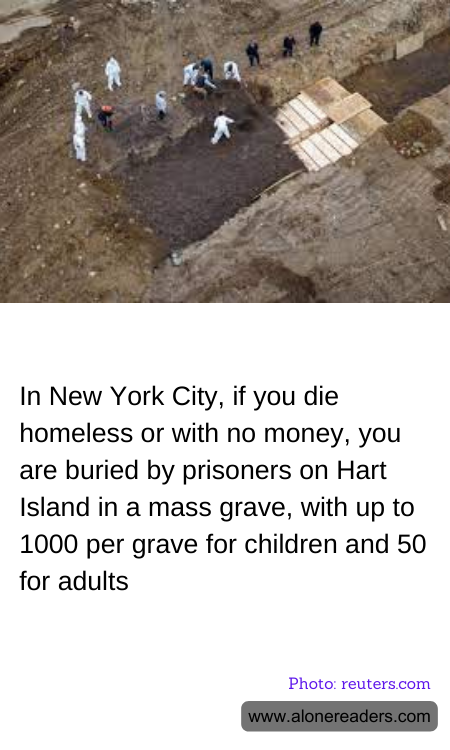
Hart Island has been a burial site since the Civil War era, and over the years, it has become the final resting place for over a million souls. The island is managed by the New York City Department of Correction, and the burials are carried out by inmates from Rikers Island. This practice has been in place for decades, with prisoners performing the solemn task of burying the deceased in mass graves. For children, up to 1,000 are interred in a single grave, while adults are buried 50 to a grave. The graves are marked with simple white markers, devoid of names, only numbers to indicate the rows and plots.
The process is stark and utilitarian, reflecting the harsh realities faced by those who die without resources or recognition. Yet, it is a necessary function, providing a dignified, albeit humble, end for those who might otherwise be forgotten. The use of prisoners for this task is a pragmatic solution, offering inmates a chance to engage in meaningful work while addressing the city's need to manage the remains of its unclaimed dead.
Efforts have been made over the years to bring more dignity and transparency to the burials on Hart Island. Advocacy groups have worked tirelessly to ensure that the stories of those buried there are not lost to time. In recent years, there have been calls to transfer the management of the island from the Department of Correction to a more appropriate agency, such as the Department of Parks and Recreation, to allow for greater public access and to honor the memory of those interred there.
Despite its somber purpose, Hart Island serves as a poignant reminder of the social and economic disparities that exist in one of the wealthiest cities in the world. It underscores the importance of community and compassion, urging society to remember and care for all its members, regardless of their circumstances in life or death. As New York City continues to evolve, the hope remains that Hart Island will become a place of remembrance and respect, where the stories of the forgotten can be acknowledged and honored.