More About This Card
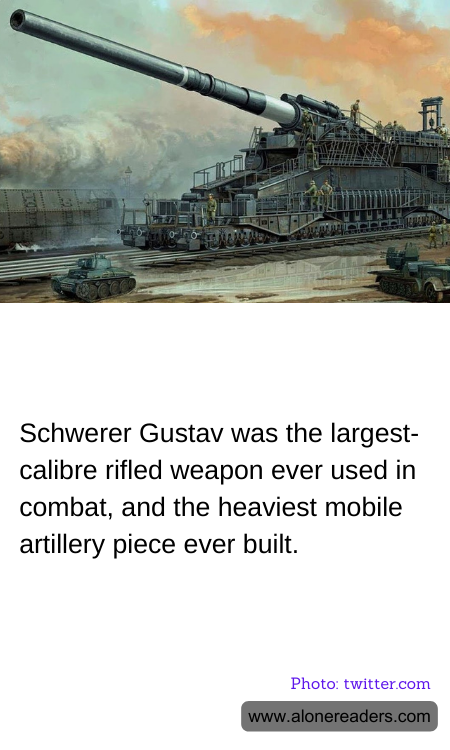
During the tumultuous years of World War II, military innovation reached unprecedented heights, with nations striving to outdo each other in technological advancements. Among the most extraordinary feats of engineering from this era was the Schwerer Gustav, a colossal artillery piece that remains unparalleled in its size and power. Built by the German arms manufacturer Krupp, the Schwerer Gustav was the largest-calibre rifled weapon ever used in combat and the heaviest mobile artillery piece ever constructed.
The Schwerer Gustav was conceived in the late 1930s, as Adolf Hitler sought a means to penetrate the formidable French Maginot Line. The weapon was designed to fire massive shells capable of obliterating heavily fortified structures. Standing over 11 meters tall and weighing approximately 1,350 tons, the Gustav was an engineering marvel. Its barrel alone stretched 32.5 meters, and it could fire shells weighing up to 7 tons over a distance of 47 kilometers. The sheer size of the artillery piece required a crew of over 1,400 men to operate, and it was transported on specially constructed railway tracks.
Despite its formidable specifications, the Schwerer Gustav saw limited action during the war. Its first and only combat deployment was during the Siege of Sevastopol in 1942, where it was used to bombard Soviet fortifications. The weapon's massive shells caused significant destruction, but its operational limitations soon became apparent. The Gustav required extensive logistical support and was vulnerable to air attacks due to its size and immobility. Additionally, the time and resources needed to prepare the gun for firing made it impractical for rapid deployment.
The legacy of the Schwerer Gustav is a testament to the extremes of military engineering and the lengths to which nations will go in pursuit of military superiority. While it was an impressive display of industrial capability, the Gustav also highlighted the limitations of relying solely on brute force in warfare. Its construction and deployment were resource-intensive, and its strategic value was questionable given the evolving nature of combat, which increasingly favored mobility and versatility over sheer firepower.
Today, the Schwerer Gustav stands as a symbol of a bygone era of warfare, where size and power were often prioritized over practicality and efficiency. It serves as a reminder of the ingenuity and ambition that characterized the military efforts of World War II, as well as the lessons learned from the limitations of such grandiose projects. As history continues to unfold, the story of the Schwerer Gustav remains a fascinating chapter in the annals of military history, capturing the imagination of those who seek to understand the complexities of war and the innovations it inspires.