More About This Card
In the vast tapestry of marine life, few creatures are as intriguing as the Sarpa salpa, a fish that has captured the imagination of historians and marine biologists alike. Known colloquially as the "dreamfish," this species is not just another inhabitant of the Mediterranean and East Atlantic waters. It holds a peculiar place in history due to its unique psychoactive properties, which were reportedly exploited during the Roman Empire for recreational purposes.
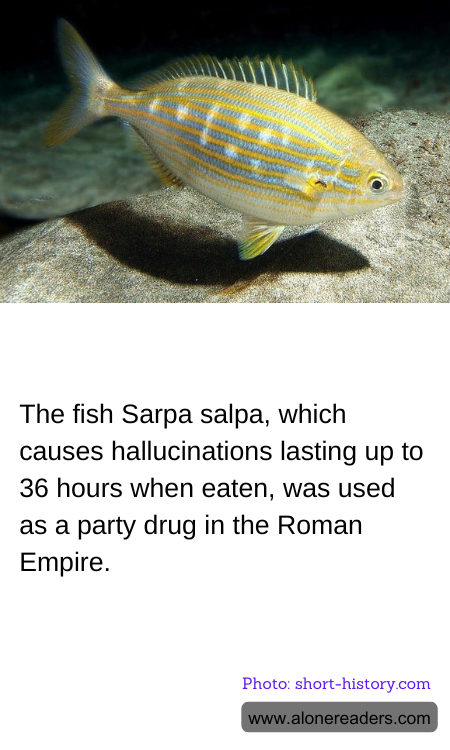
Sarpa salpa is a type of sea bream, easily identifiable by its golden stripes running along its silvery body. While it might appear unassuming, this fish harbors a secret that has fascinated people for centuries. When consumed, Sarpa salpa can induce vivid hallucinations that may last up to 36 hours. This phenomenon, known as ichthyoallyeinotoxism, is believed to be caused by certain toxins present in the fish, possibly originating from its diet of particular algae and phytoplankton.
The ancient Romans, known for their lavish feasts and penchant for indulgence, are said to have used Sarpa salpa as a natural party drug. Historical accounts suggest that the fish was consumed during banquets to enhance the revelry with its mind-altering effects. While the exact details of its use in Roman times remain somewhat shrouded in mystery, the notion that a fish could serve as a conduit to altered states of consciousness adds a fascinating layer to our understanding of ancient recreational practices.
Modern encounters with Sarpa salpa-induced hallucinations are rare but not unheard of. There have been documented cases in recent decades where individuals who consumed the fish experienced intense visual and auditory hallucinations. These episodes, while temporary, can be quite disorienting and are generally not sought after by those who inadvertently ingest the fish today.
Despite its hallucinogenic reputation, Sarpa salpa is not inherently dangerous when prepared and consumed properly. It remains a popular dish in some Mediterranean cuisines, valued for its delicate flavor. However, the unpredictability of its psychoactive effects means that caution is advised for those unfamiliar with its potential impact.
The story of Sarpa salpa serves as a reminder of the complex and often surprising interactions between humans and the natural world. It highlights the diverse ways in which different cultures have utilized the resources available to them, sometimes in ways that challenge our modern perceptions of food and drug use. As we continue to explore the depths of our oceans, the enigmatic Sarpa salpa stands as a testament to the enduring allure of the sea and its many mysteries.