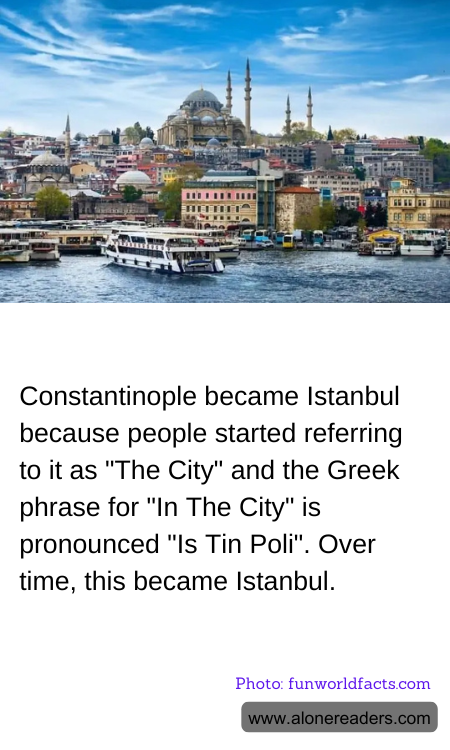
The transformation of Constantinople into Istanbul is a fascinating tale of linguistic evolution and cultural transition. This historical metamorphosis is not merely a change of name but a reflection of the city's dynamic identity through centuries of history. The name Istanbul, as it is known today, has its roots in the Greek phrase "Is Tin Poli," which translates to "In The City." This phrase was commonly used by the local Greek-speaking population to refer to Constantinople, the heart of the Byzantine Empire and a bustling metropolis.
Constantinople, founded by Roman Emperor Constantine the Great in 330 AD, was strategically positioned at the crossroads of Europe and Asia. It served as a vital hub for trade, culture, and politics. Over time, as the city flourished, it became simply known as "The City" due to its prominence and significance. The phrase "Is Tin Poli" was used by the Greeks to indicate their destination when traveling to this vibrant center of civilization. As the phrase was repeated over generations, it gradually morphed into the word "Istanbul."
The transition from Constantinople to Istanbul was not an overnight change but rather a gradual linguistic shift that occurred over centuries. The Ottoman Turks, who conquered the city in 1453, adopted the name Istanbul, which had already been in colloquial use among the local population. The Ottomans respected the city's historical legacy while also imprinting their own cultural identity upon it. The name Istanbul became more widely recognized and officially adopted as the city's name in the early 20th century, following the establishment of the Republic of Turkey.
This evolution of the city's name is a testament to the fluid nature of language and the way it adapts to cultural and historical contexts. Istanbul's name change is emblematic of its ability to embrace change while maintaining its rich heritage. The city has been a melting pot of cultures, religions, and languages, each leaving its mark on its identity. From its Byzantine roots to its Ottoman grandeur and modern Turkish vibrancy, Istanbul continues to be a city that bridges continents and cultures.
Today, Istanbul stands as a symbol of continuity and change, embodying the spirit of a city that has been at the center of world history for millennia. Its name, derived from a simple phrase meaning "In The City," encapsulates the essence of a place that has always been more than just a geographical location. Istanbul is a living testament to the enduring legacy of human civilization, where the past and present coexist in a harmonious blend of tradition and modernity.
