More About This Card
In the 1980s, a peculiar and fascinating intersection of nature and industry unfolded in Australia, involving beer bottles and a species of beetle. This unusual story highlights the unexpected ways in which human activities can impact wildlife, sometimes in the most surprising of manners.
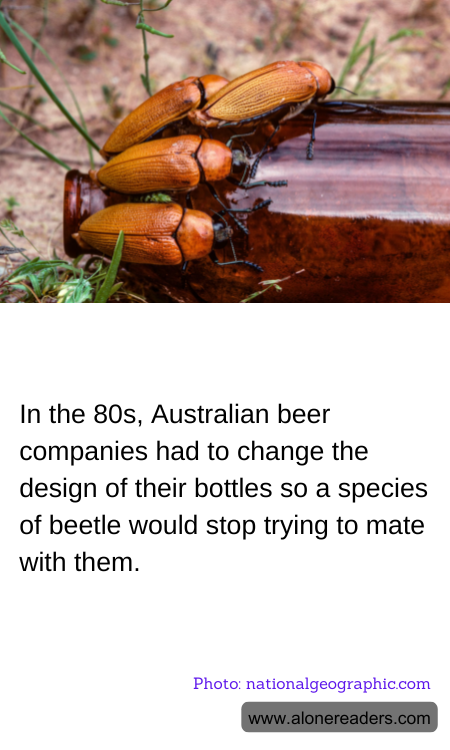
During this time, Australian beer companies faced an unforeseen challenge when they discovered that a local species of beetle, the jewel beetle, was irresistibly attracted to their beer bottles. The male jewel beetles, in particular, were drawn to the bottles, mistaking them for potential mates. This was due to the bottles' color and texture, which closely resembled the female beetles' appearance. The bottles were typically a glossy brown, similar to the hue of the female jewel beetle's exoskeleton, and the reflective surface of the glass further mimicked the sheen of a female beetle.
The beetles' confusion led to a significant problem. The males would attempt to mate with the bottles, often to the point of exhaustion or death, as they were unable to disengage from what they perceived as a potential partner. This not only posed a threat to the beetle population but also raised concerns among environmentalists and beer companies alike. The situation was a stark reminder of how human-made objects can inadvertently interfere with natural behaviors and ecosystems.
In response to this unexpected dilemma, Australian beer companies took proactive measures to redesign their bottles. The goal was to create a bottle that would not attract the beetles, thereby preventing the insects from wasting their reproductive efforts on inanimate objects. The companies experimented with different colors and finishes to make the bottles less appealing to the beetles. By altering the design, they aimed to break the visual cues that were leading the beetles astray.
This incident serves as an intriguing example of how industries can adapt to environmental challenges and underscores the importance of considering the ecological impact of product design. It also highlights the delicate balance between human innovation and the natural world, reminding us that even the most mundane objects can have unforeseen effects on wildlife.
The story of the jewel beetles and the beer bottles is a testament to the complexity of ecosystems and the interconnectedness of all living things. It encourages us to be mindful of our creations and their potential impact on the environment, fostering a greater awareness of the need for sustainable and ecologically sensitive design practices.