More About This Card
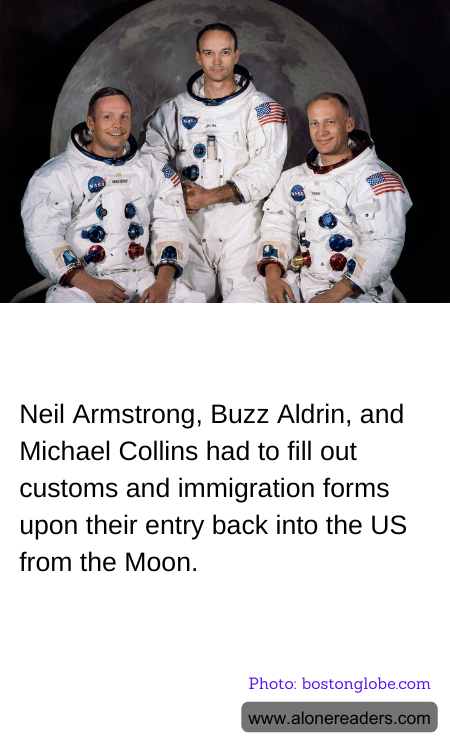
In a delightful twist of bureaucratic humor, the story of Apollo 11 astronauts Neil Armstrong, Buzz Aldrin, and Michael Collins filling out customs and immigration forms upon their return from the Moon has become a charming anecdote in the annals of space exploration history. This seemingly mundane task highlights the intersection of groundbreaking achievements and everyday procedures, offering a glimpse into the lighter side of space travel.
When the Apollo 11 crew made their historic journey to the Moon in July 1969, they were not only venturing into the unknown but also setting a precedent for future space missions. Upon their return to Earth, the astronauts landed in the Pacific Ocean and were promptly picked up by the USS Hornet. As part of the re-entry process into the United States, they were required to fill out customs declarations, a standard procedure for anyone entering the country from abroad. However, the notion of declaring items brought back from the Moon was both unprecedented and amusing.
The customs form, dated July 24, 1969, lists the departure point as "Moon" and the arrival point as "Honolulu, Hawaii." Under the section for "Any other items," the astronauts humorously declared "Moon rock and Moon dust samples." This whimsical documentation serves as a reminder that even the most extraordinary journeys are subject to the ordinary rules and regulations of international travel. The form, now a piece of historical memorabilia, underscores the novelty of space exploration at the time and the uncharted territory it represented, not just in terms of science and technology, but also in terms of legal and administrative processes.
This anecdote also reflects the meticulous nature of NASA's operations, where every detail, no matter how trivial it might seem, was accounted for. It highlights the importance of maintaining a sense of normalcy and order, even in the face of unprecedented achievements. The customs form is a testament to the fact that, despite their monumental accomplishments, the astronauts were still subject to the same procedures as any other traveler returning to the United States.
For audiences today, this story serves as a charming reminder of the human aspects of space exploration. It illustrates how even the most groundbreaking achievements are intertwined with the everyday experiences that connect us all. The tale of the Apollo 11 customs form continues to capture the imagination of people of all ages, offering a lighthearted perspective on one of humanity's most significant milestones. As we look to the future of space travel, this story remains a delightful reminder of the blend of the extraordinary and the ordinary that defines our journey into the cosmos.