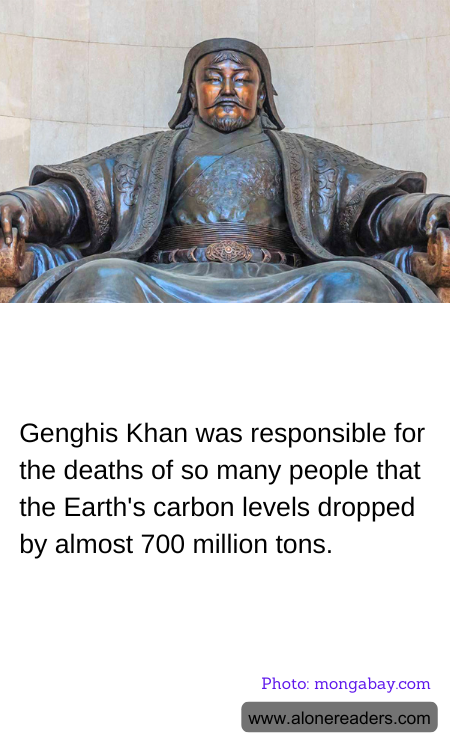
Genghis Khan, the formidable founder of the Mongol Empire, is often remembered for his unparalleled military conquests and the vast empire he established in the 13th century. However, his legacy extends beyond the battlefield and into the realm of environmental impact. It is estimated that the actions of Genghis Khan and his Mongol hordes were responsible for the deaths of so many people that the Earth's carbon levels dropped by nearly 700 million tons.
This staggering statistic is rooted in the sheer scale of the Mongol conquests, which resulted in the deaths of an estimated 40 million people. The depopulation of vast regions led to the abandonment of agricultural lands, which then reverted to forests and grasslands. These newly rewilded areas absorbed significant amounts of carbon dioxide from the atmosphere, contributing to a measurable decline in global carbon levels. This phenomenon is a stark reminder of the interconnectedness of human activity and environmental change.
The Mongol Empire, at its height, stretched from Eastern Europe to the Sea of Japan, covering vast swathes of Asia and parts of Europe. The conquests were marked by widespread destruction and the decimation of entire cities and civilizations. As these areas were depopulated, the natural environment began to reclaim the land. Forests grew back, and grasslands expanded, acting as carbon sinks that absorbed carbon dioxide from the atmosphere.
While the reduction in carbon levels might seem like a positive environmental outcome, it is essential to recognize the human cost that accompanied it. The loss of life and the destruction of cultures and societies were immense. The environmental impact of Genghis Khan's conquests serves as a historical example of how human actions can have unintended consequences on the planet's ecosystems.
Today, as we face the challenges of climate change, the story of Genghis Khan's environmental impact offers a unique perspective on the relationship between human activity and the environment. It highlights the potential for large-scale changes in land use to influence global carbon levels, a concept that is increasingly relevant as we seek sustainable solutions to reduce carbon emissions and mitigate climate change.
In conclusion, Genghis Khan's legacy is a complex tapestry of military prowess, cultural influence, and environmental impact. The reduction in carbon levels during his reign is a testament to the profound effects that human actions can have on the planet. As we navigate the challenges of the modern world, understanding the lessons of history can guide us toward a more sustainable and balanced future.
