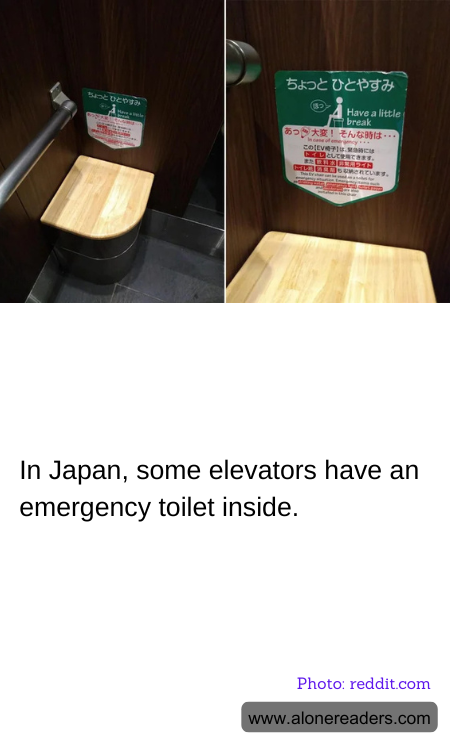
In Japan, a country renowned for its innovative approach to technology and public safety, some elevators are equipped with an unusual yet practical feature: an emergency toilet. This thoughtful addition is a testament to Japan's commitment to preparedness and consideration for human needs, even in the most unexpected situations.
The concept of an emergency toilet in elevators might seem peculiar at first glance, but it is a logical response to the unique challenges posed by Japan's geographical and urban landscape. Japan is a nation frequently affected by natural disasters, particularly earthquakes. In such events, elevators can become immobilized, trapping occupants for extended periods. Recognizing this potential hazard, some Japanese building designers have incorporated emergency toilets into elevators to ensure that those who find themselves stuck are not left without basic sanitary facilities.
These emergency toilets are typically compact and discreet, designed to be unobtrusive yet functional. They are often integrated into a bench or a compartment within the elevator, ensuring they do not interfere with the elevator's primary function or aesthetics. The toilets are equipped with disposable bags and deodorizing agents to manage waste and odor, maintaining a level of hygiene and comfort for users. This thoughtful design ensures that even in a confined space, individuals can maintain their dignity and well-being.
The inclusion of emergency toilets in elevators is part of a broader culture of safety and preparedness that permeates Japanese society. In addition to toilets, many elevators in Japan are also equipped with emergency supplies such as water, blankets, and first aid kits. These measures reflect a proactive approach to disaster management, emphasizing the importance of readiness and resilience in the face of unforeseen events.
Moreover, this innovation highlights Japan's ability to blend practicality with empathy. By considering the needs of individuals who might find themselves in distressing situations, Japanese designers and engineers demonstrate a deep understanding of human psychology and comfort. This approach not only enhances safety but also provides peace of mind to those who use these facilities, knowing that their well-being has been thoughtfully considered.
In conclusion, the presence of emergency toilets in some Japanese elevators is a fascinating example of how a society can adapt to its environmental challenges with ingenuity and care. It underscores the importance of planning for the unexpected and ensuring that even in moments of crisis, human dignity and comfort are preserved. As other countries look to enhance their own disaster preparedness strategies, they might find inspiration in Japan's innovative and compassionate approach to public safety.
