More About This Card
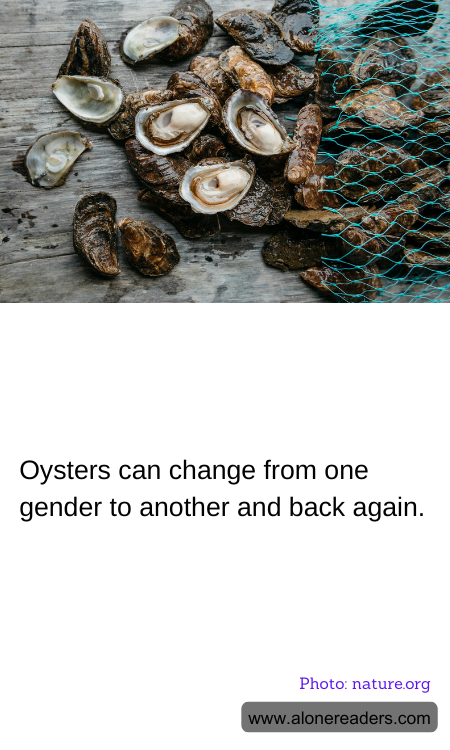
Oysters are fascinating creatures that inhabit the world's oceans, and one of their most intriguing characteristics is their ability to change gender. This remarkable biological phenomenon allows oysters to adapt to their environment and ensure the continuation of their species. Unlike many animals that are born with a fixed gender, oysters possess the unique ability to switch from one gender to another and even revert back again, depending on various environmental factors and life stages.
The gender transformation in oysters is primarily influenced by their age and the surrounding environmental conditions. Typically, oysters begin their lives as males, producing sperm during their early years. As they grow and mature, many oysters transition to females, a process that is often triggered by changes in water temperature, food availability, and population dynamics. This ability to switch genders is known as sequential hermaphroditism, a trait that is not only fascinating but also crucial for the survival of oyster populations.
The gender flexibility of oysters plays a significant role in their reproductive strategy. By starting life as males, oysters can contribute to the gene pool early on, when they are smaller and require fewer resources to produce sperm. As they grow larger and accumulate more energy reserves, they can transition to females, which allows them to produce eggs. This strategy maximizes their reproductive output over their lifespan, ensuring that they can adapt to varying environmental conditions and maintain a stable population.
Moreover, the ability to change gender helps oysters maintain a balanced sex ratio within their communities. In environments where one gender becomes more prevalent, the ability to switch can help restore balance, ensuring that there are enough males and females to sustain reproduction. This adaptability is particularly important in areas where environmental changes or human activities may disrupt natural oyster populations.
Oysters' gender-changing ability also highlights the incredible diversity and adaptability of marine life. It serves as a reminder of the complex and interconnected systems that govern life in our oceans. By understanding and appreciating these unique biological traits, we can better appreciate the importance of conserving marine ecosystems and the diverse species that inhabit them.
In conclusion, the gender-changing ability of oysters is a testament to the wonders of nature and the adaptability of life in the ocean. This remarkable trait not only ensures the survival and reproductive success of oysters but also underscores the importance of preserving the delicate balance of marine ecosystems. As we continue to explore and learn about the natural world, the story of the oyster serves as a fascinating example of the intricate and dynamic processes that sustain life on our planet.